Letter formationstart right, write right.
Letter formation is how a letter is made: where the pencil starts, which way it moves and in what order the strokes go. Getting it right early makes writing faster and neater later.
Start at the top
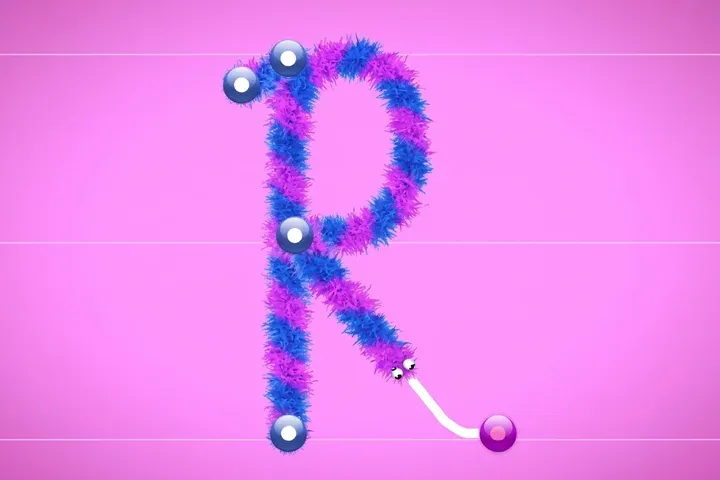
Most letters start at the top and go down. Before writing, help your child find the start point. On our worksheets and in the app, it is the dot marked 1.
Teach letters in families
Group letters that start with the same stroke: straight-line letters (l, t, i), curve letters (c, o, a, d, g) and hump letters (n, m, h, r). Once a child knows c, the letters a, d and g are much easier.
Tap, trace, write
First tap the dots and watch the letter being formed, then trace it, then write it without help. Each step gives a little less support.
Short and often
A few minutes every day works better than one long session. Stop while it is still fun.
Games





Read more
 Pencil 2.0: The StylusIn today’s digital age, the art of pen on paper may seem like much more effort than sending a quick text message complete with emojis and acronyms. Although this (albeit) beautiful art form is slowly becoming less and less popular, it remains an essential part of the learning process. According to The Educator, research proves that the physical act of “annotating during lessons can make a significant difference.” With this information in mind, how can we combine this kinesthetic experience while still moving our students into the technological world? Welcome to your new teaching best friend: the stylus.
 Behind the Scenes – Interview App of the DayLetterSchool was recently featured on the App of the Day and we are thrilled about it. During our short talk with the team, we described the development process of our latest update, the challenges of developing an educational app and what it’s coming next.
 LetterSchool Enhances Young Learners’ Handwriting and Manual DexterityResearchers at the University of Texas at Arlington investigated the effectiveness of digital handwriting applications when paired with the traditional method of practicing handwriting. Both groups in the study (control and experimental) were given worksheets to practice their handwriting. The major difference was that the experimental group also used an application (LetterSchool) on a tablet with a stylus. Findings from this study prove that including digital applications within instruction can enhance children’s handwriting skills. This may also lead to an overall increase in many fine motor skills.
Try LetterSchool for free nowyour child will love it
Join the 7+ million parents around the world who already let their kids benefit from using LetterSchool.