

Reading longer words
Your child reads short words well but gets stuck on longer words like sunset, rabbit or jumping. The trick is to break long words into parts.
For: Parents, teachers and therapists of children aged 4 to 8
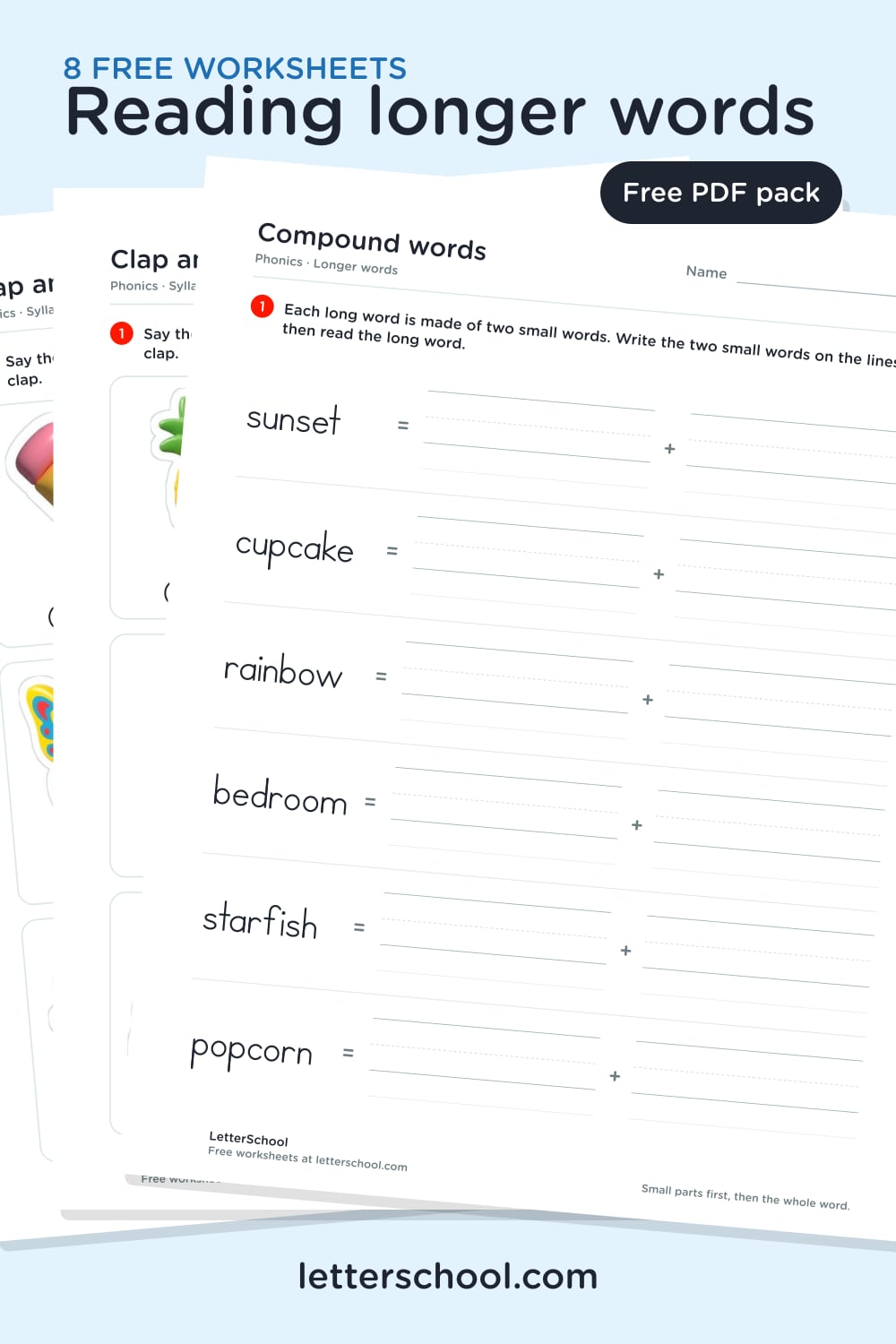
A cover page with the plan, then 8 worksheets in order (9 pages). Free, no sign-up.
Free, no sign-up. US Letter size. Download A4 instead · Open to print
 Save to Pinterest
Why it happens
- Long words are too much to sound out letter by letter.
- Children need to see the parts: two small words (sun + set), syllables (rab + bit) or an ending (jump + ing).
- Guessing often starts when words get longer.
What helps
- Clap the syllables first.
- Find small words you know inside the long word.
- Cover the ending, read the base word, then add the ending.
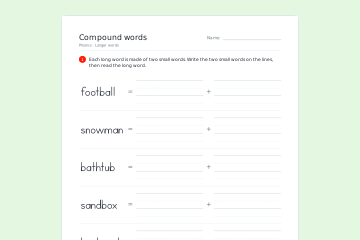
- Practise with compound words first; they are the easiest.
The planstep by step.
1Clap it
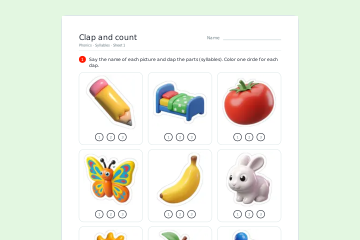
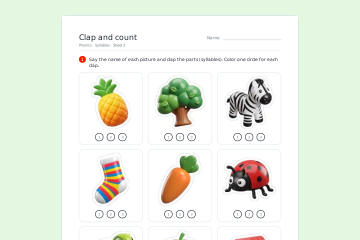
Count syllables.
2Two words in one
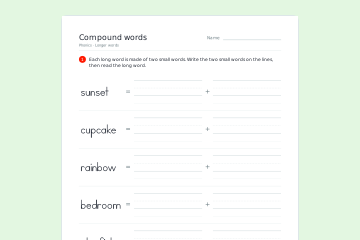
Compound words.
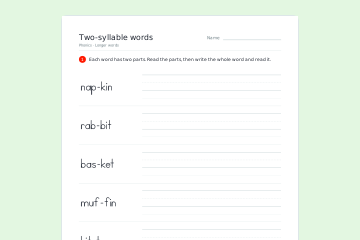
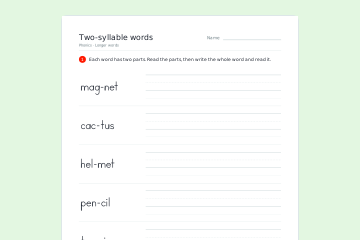
3Syllables
Split two-syllable words.
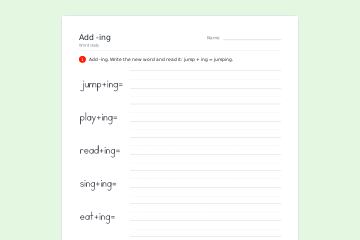
4Endings
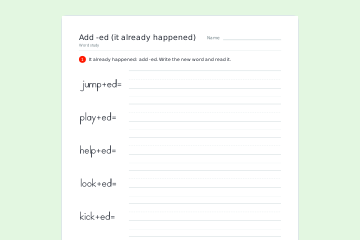
Add -ing and -ed.
When to ask for help
Ask the teacher if longer words remain very hard in 2nd grade and reading is much slower than for classmates.
These worksheets are practice materials, not a diagnosis or a treatment. Every child develops at their own pace. If you are worried, talk to your child’s teacher, doctor or a specialist.
When do children start reading two-syllable words?
Related packs
Sources
The LetterSchool app
Between worksheets: practise in the app
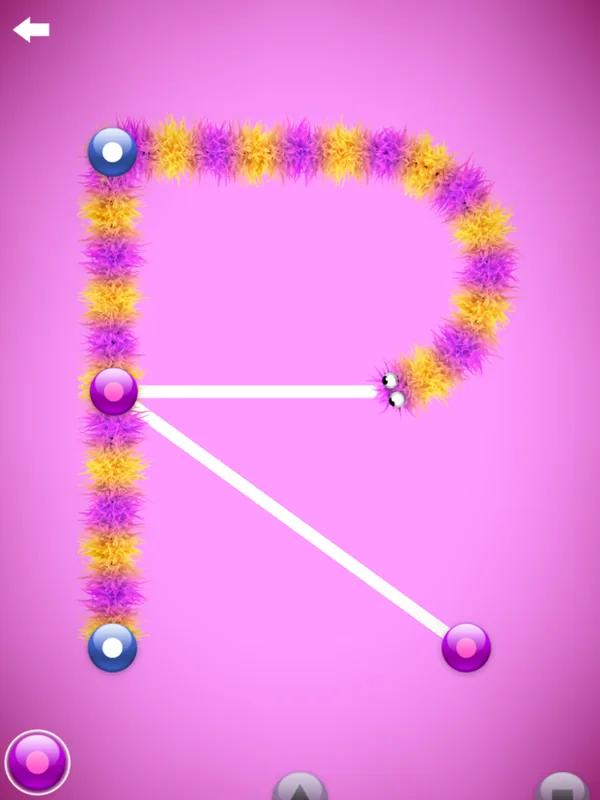
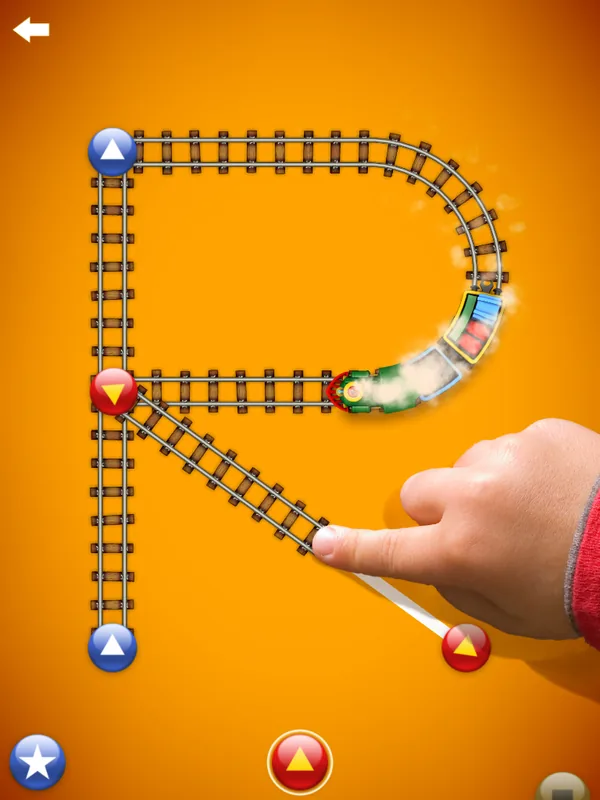
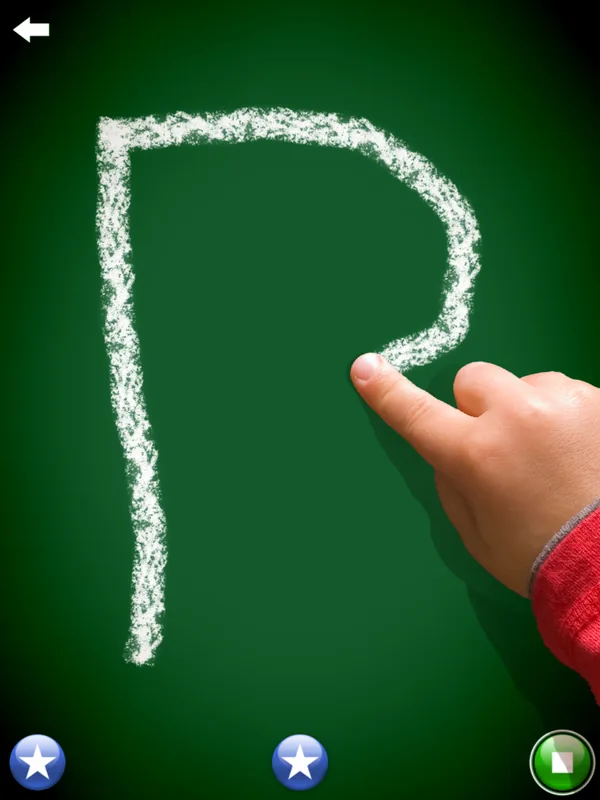
The same letter shapes as this sheet, with instant feedback on every line, animations and stars. Children play, and learn the right formation.