

DCD (dyspraxia) and handwriting
Your child is clumsy, finds buttons, cutting and ball games hard, and handwriting is a struggle. Developmental coordination disorder (DCD, also called dyspraxia) affects the planning and coordination of movement.
For: Parents, teachers and therapists of children aged 4 to 8
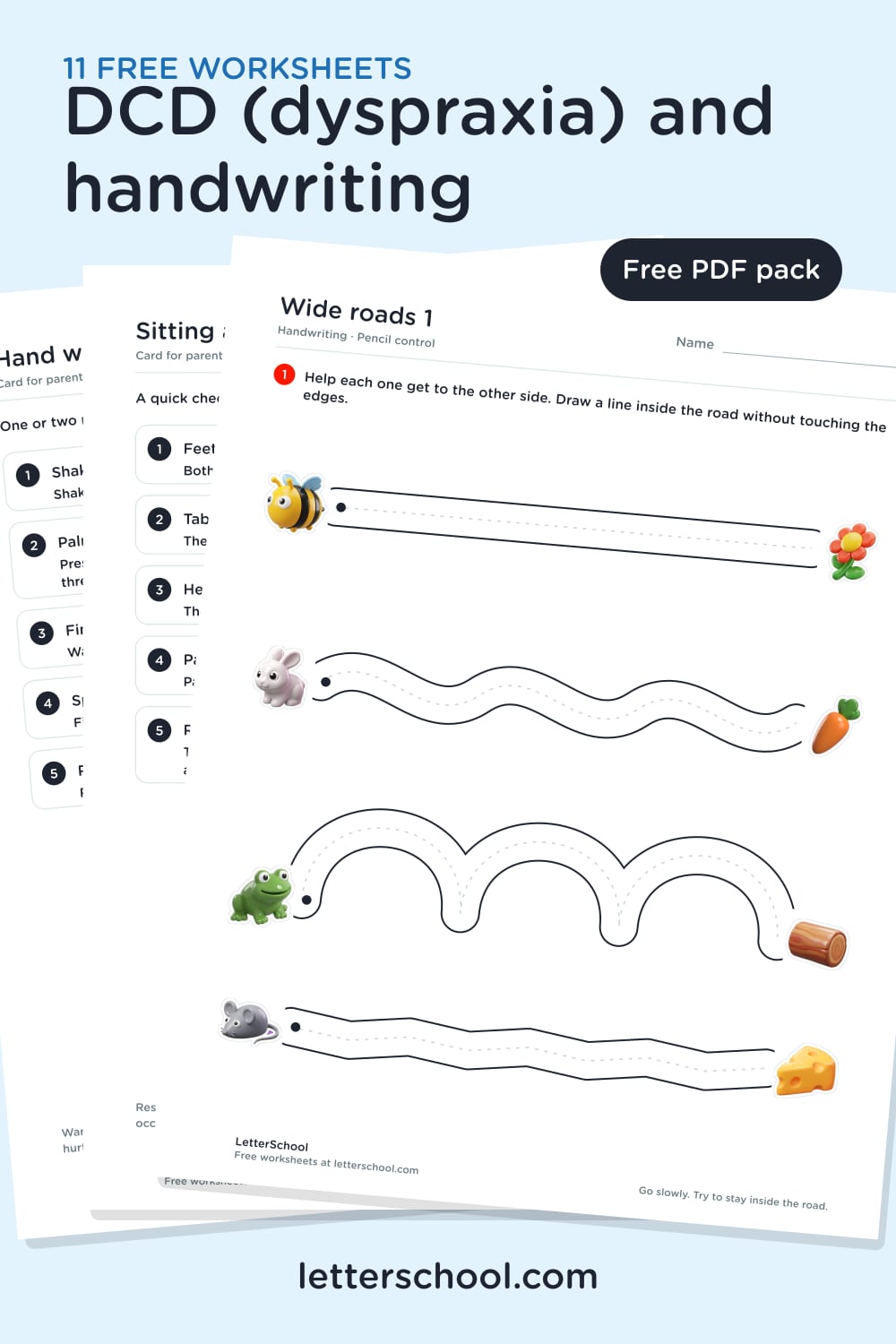
A cover page with the plan, then 11 worksheets in order (12 pages). Free, no sign-up.
Free, no sign-up. US Letter size. Download A4 instead · Open to print
 Save to Pinterest
Why it happens
- Learning new movements takes much more practice, and they do not become automatic as easily.
- Handwriting combines planning, control and speed, which is hard with DCD.
- Children with DCD often tire faster and may feel frustrated.
What helps
- Break letters into steps and say them aloud.
- Practise one movement at a time with lots of repetition.
- Big movements first (air writing, big paper), then smaller.
- Wide lines and bold guides.
- Good seating and a stable surface.
- Typing and other tools as children get older.
The planstep by step.
1Warm up and sit well
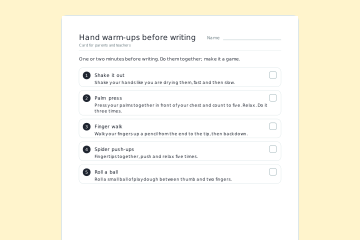
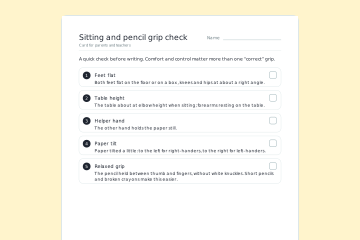
Hand warm-ups and a seating check.
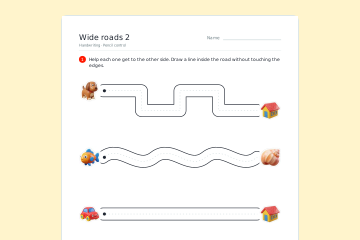
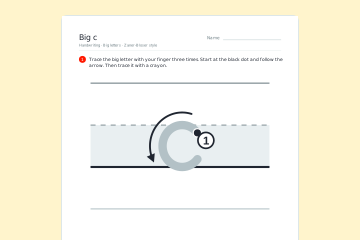
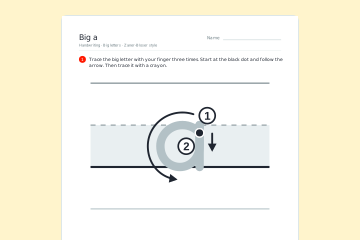
2Big and wide
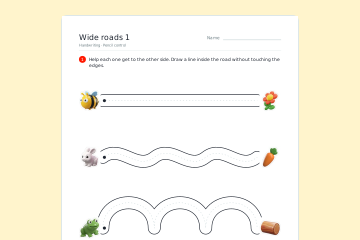
Wide paths and big letters.
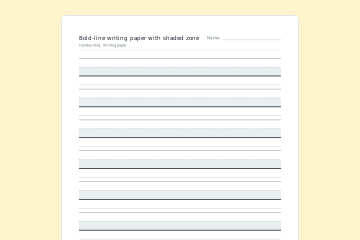
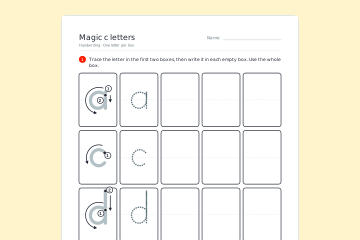
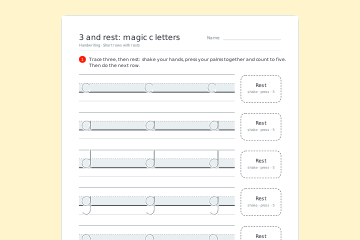
3Letters with support
Bold lines, boxes and short rows.
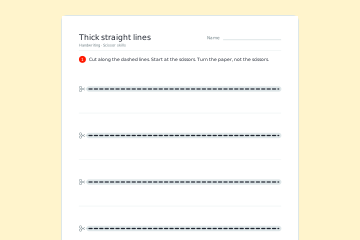
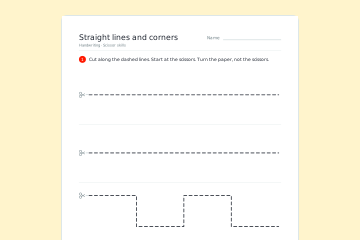
4Cutting
Thick-line scissor practice.
When to ask for help
Ask your doctor or an occupational therapist (OT) if coordination difficulties affect everyday activities (dressing, eating, play, handwriting) much more than for other children the same age.
These worksheets are practice materials, not a diagnosis or a treatment. Every child develops at their own pace. If you are worried, talk to your child’s teacher, doctor or a specialist.
Questions
Questions about dcd / dyspraxia
Still have questions? Visit our Help Center or get in touch.
Is DCD the same as dyspraxia?
Related packs
Sources
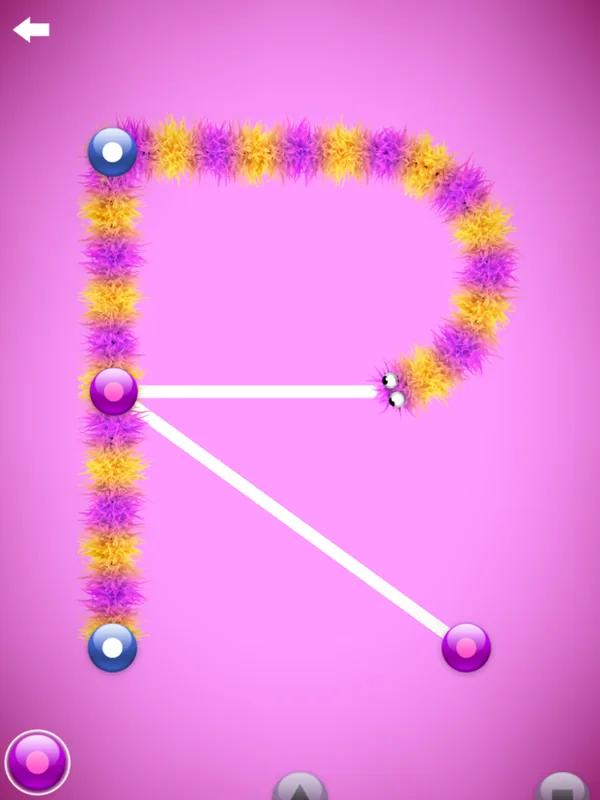


The LetterSchool app
Between worksheets: practise in the app
The same letter shapes as this sheet, with instant feedback on every line, animations and stars. Children play, and learn the right formation.