

Dysgraphia: when writing is unusually hard
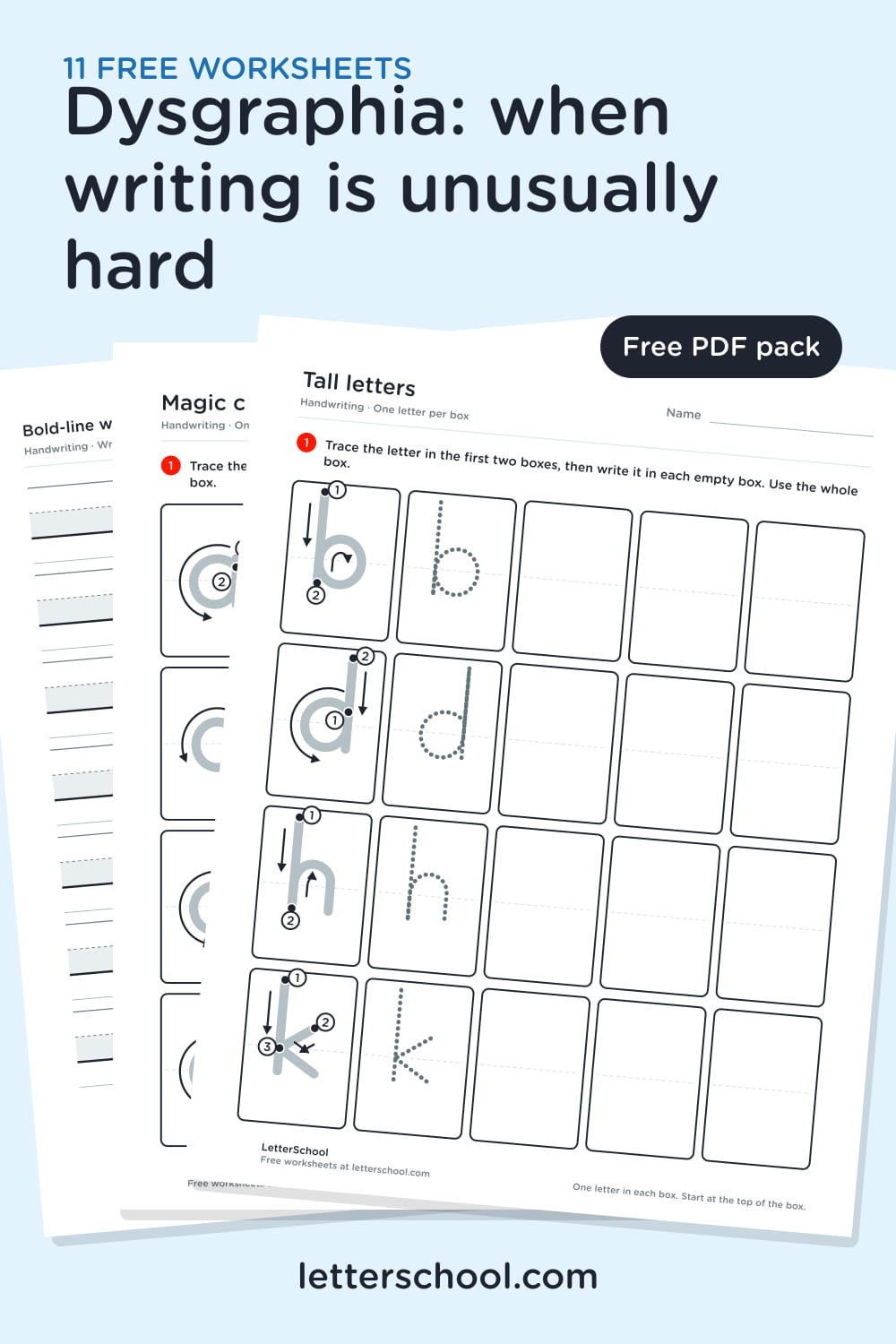
Your child’s handwriting is very hard to read, slow and tiring, even with practice, and writing down ideas is a struggle. Dysgraphia is a learning difference that affects handwriting, spelling and putting thoughts on paper.
For: Parents, teachers and therapists of children aged 4 to 8
A cover page with the plan, then 11 worksheets in order (12 pages). Free, no sign-up.
Free, no sign-up. US Letter size. Download A4 instead · Open to print
 Save to Pinterest
Why it happens
- Forming letters does not become automatic, so writing takes all of the child’s attention.
- Spacing, sizing and staying on the line are hard.
- It often comes with spelling difficulties, and sometimes with dyslexia, ADHD or DCD.
What helps
- Explicit teaching of letter formation, a few letters at a time, with lots of short practice.
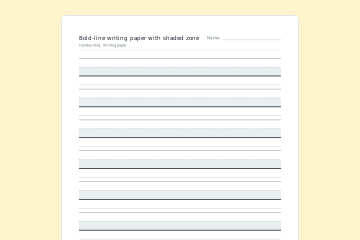
- Paper with bold lines or boxes.
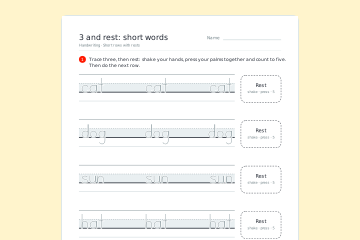
- Short rows with rests.
- Separate the ideas from the handwriting: say it, then write it, or type it.
- Accommodations at school: less copying, more time, typing.
The planstep by step.
1Clear lines
Bold-line paper and one letter per box.
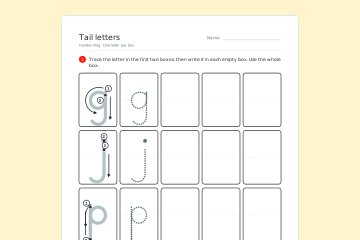
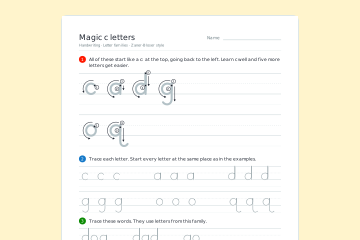
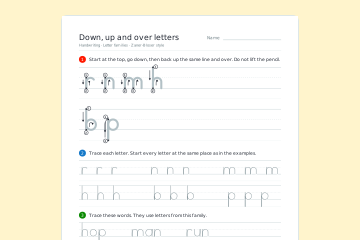
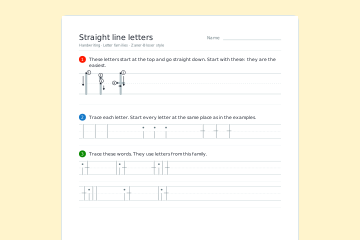
2Letter families
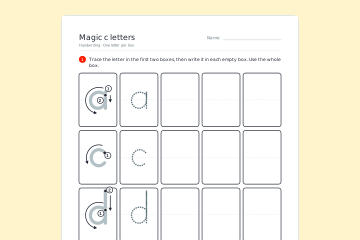
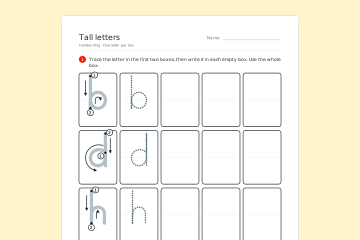
Formation with start dots.
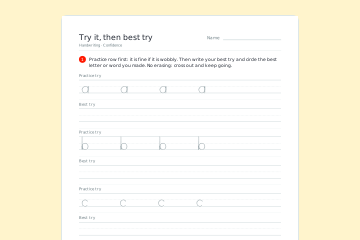
3Short and kind
Short rows and tries.
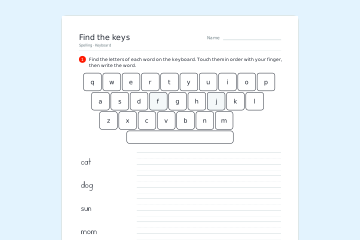
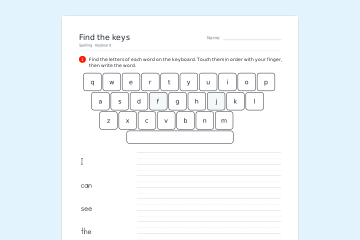
4Other ways to write
Keyboard practice.
When to ask for help
Ask the school for an assessment, and an occupational therapist (OT) for handwriting, if writing stays very hard to read, slow or painful despite regular practice.
These worksheets are practice materials, not a diagnosis or a treatment. Every child develops at their own pace. If you are worried, talk to your child’s teacher, doctor or a specialist.
At what age can dysgraphia be identified?
Related packs
Sources
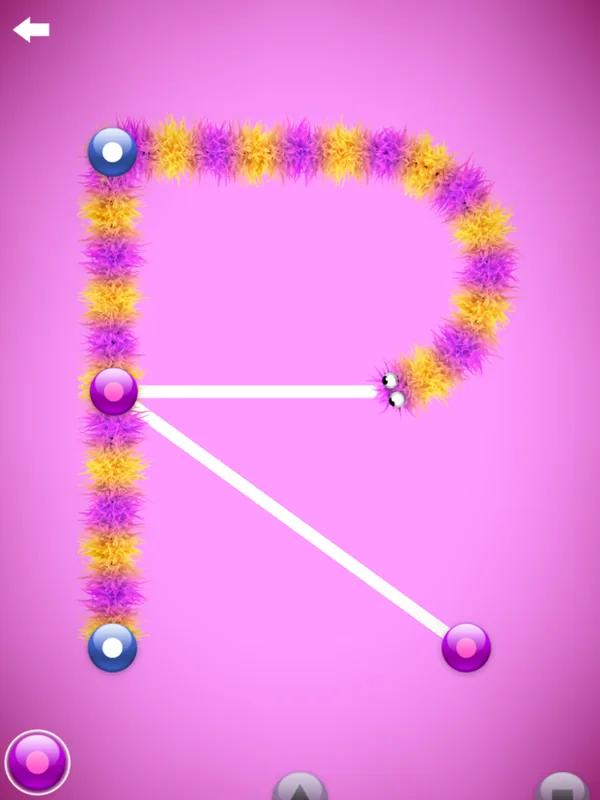
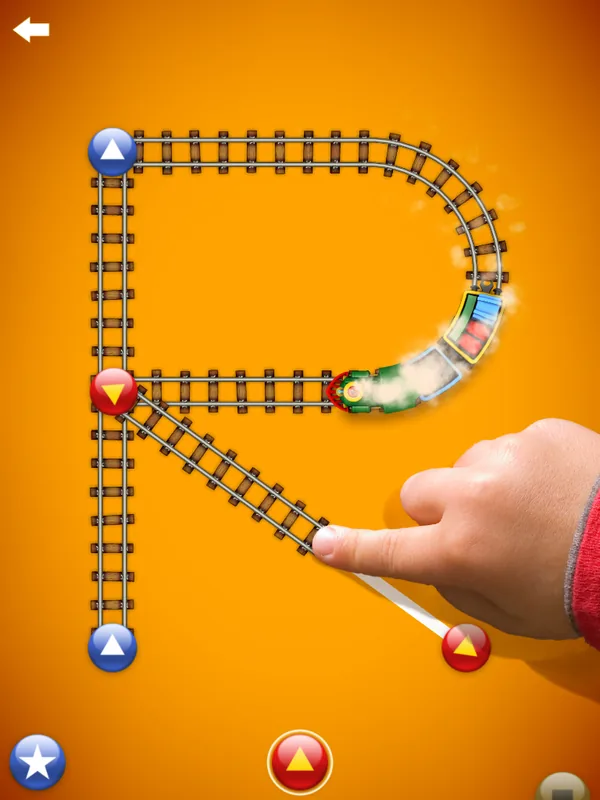
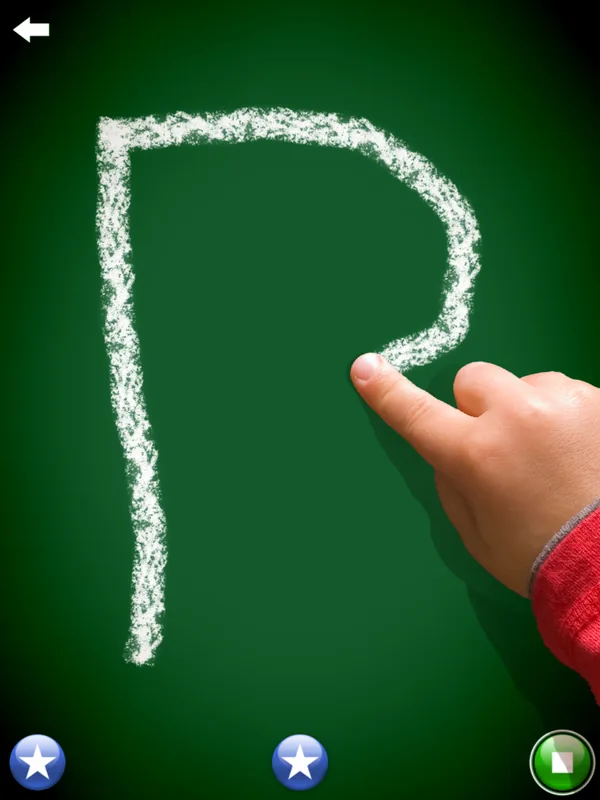
The LetterSchool app
Between worksheets: practise in the app
The same letter shapes as this sheet, with instant feedback on every line, animations and stars. Children play, and learn the right formation.