

Not ready to write letters yet? Start with pre-writing
Your child is not ready to write letters yet: lines wobble, circles do not close, or the pencil grip is still a fist. Every letter is built from a few basic strokes, and children who master those first find letters much easier.
For: Parents and preschool teachers of children aged 3 to 5
A cover page with the plan, then 20 worksheets in order (21 pages). Free, no sign-up.
Free, no sign-up. US Letter size. Download A4 instead · Open to print
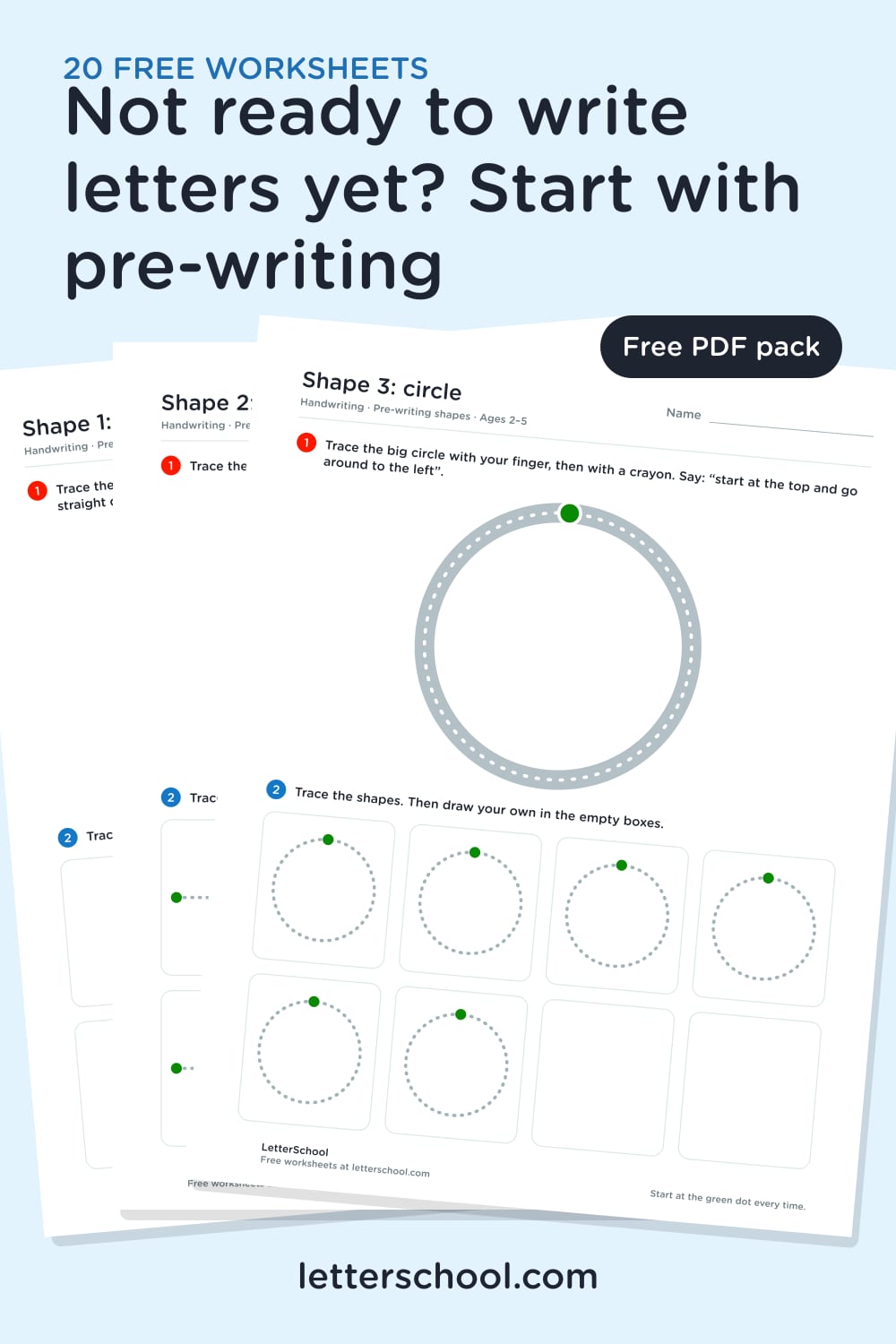 Save to Pinterest
Why it happens
- Letters are made of lines, curves, slants and circles. A child who cannot draw a slanted line yet cannot make an A or a k.
- Children develop strokes in a typical order: vertical and horizontal lines and circles come first, then crosses, slants and finally more complex shapes.
- Hand strength and pencil control develop with practice, play and age.
What helps
- Practise strokes in order: straight lines, circles, then slants and curves.
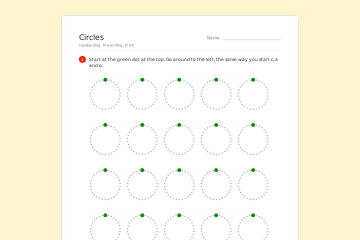
- Always start at the same point (the green dot) and go in the same direction as in letters: top to bottom, left to right.
- Use short crayons or broken chalk: they encourage a fingertip grip instead of a fist.
- Play counts: playdough, tweezers, stickers and drawing build the same muscles.
The planstep by step.
1Before you start: the nine shapes
Copy the nine pre-writing shapes in order: | — O + □ / \ X △. Most children can copy all nine by about age 5.
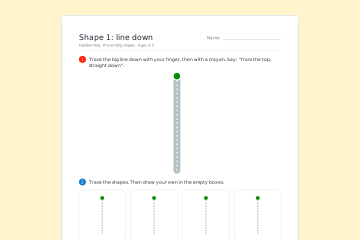 Pre-Writing Shapes 1 of 9: Line down
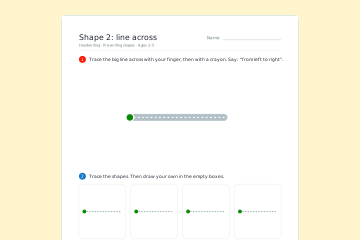 Pre-Writing Shapes 2 of 9: Line across
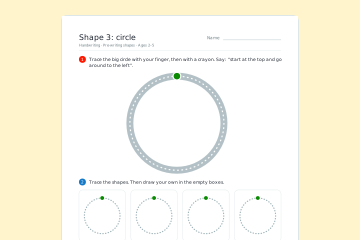 Pre-Writing Shapes 3 of 9: Circle
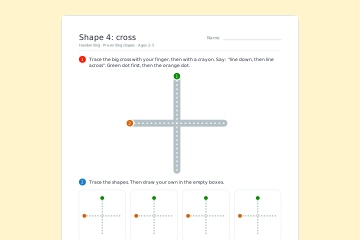 Pre-Writing Shapes 4 of 9: Cross
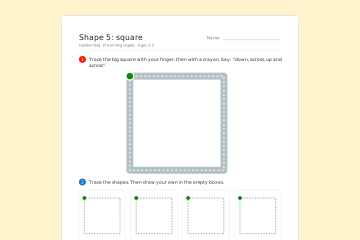 Pre-Writing Shapes 5 of 9: Square
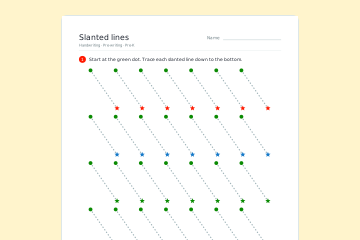
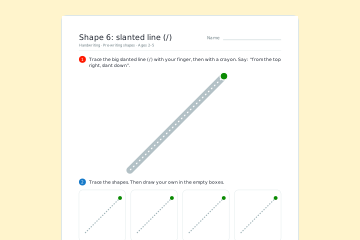 Pre-Writing Shapes 6 of 9: Slanted line (/)
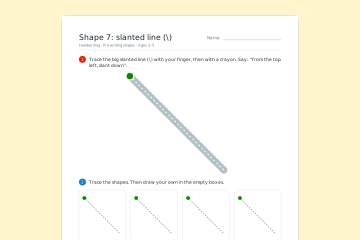 Pre-Writing Shapes 7 of 9: Slanted line (\)
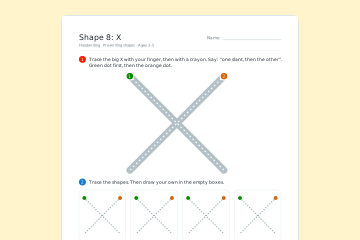 Pre-Writing Shapes 8 of 9: X
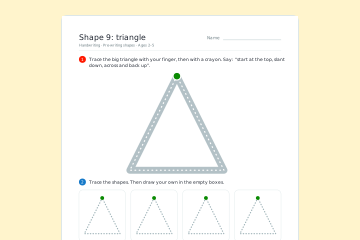 Pre-Writing Shapes 9 of 9: Triangle
2Week 1: lines
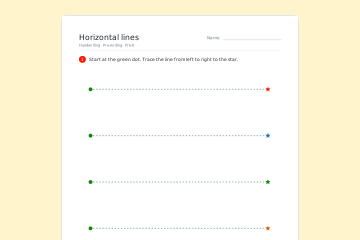
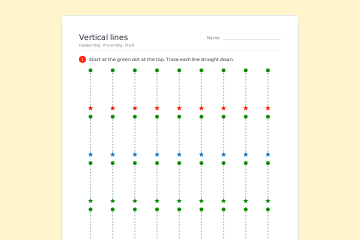
Horizontal and vertical lines, from the green dot to the star.
3Week 2: slants and curves
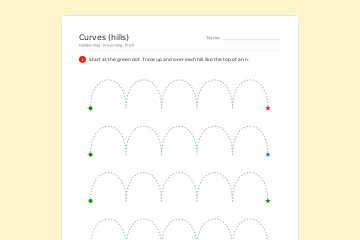
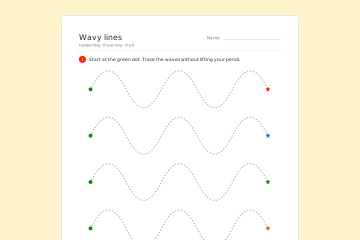
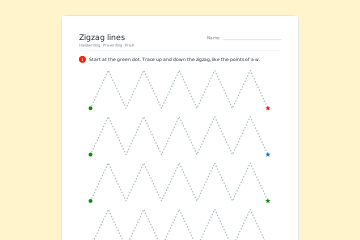
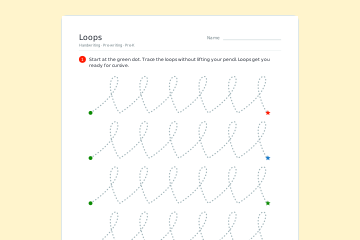
Slanted lines, hills, waves, zigzags and loops.
4Week 3: first letters
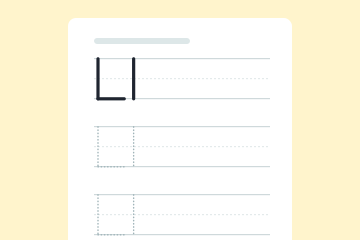
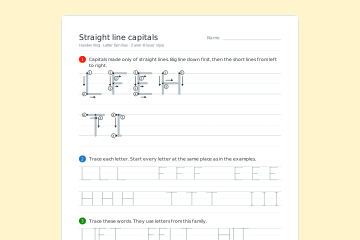
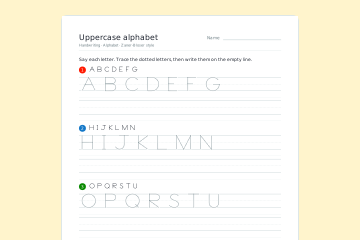
The easiest capitals use only straight lines. Try L, then the straight line capitals.
Questions
Questions about pre-writing skills
Still have questions? Visit our Help Center or get in touch.
At what age can children start writing letters?
What is the right pencil grip?
Related packs
The LetterSchool app
Between worksheets: practise in the app
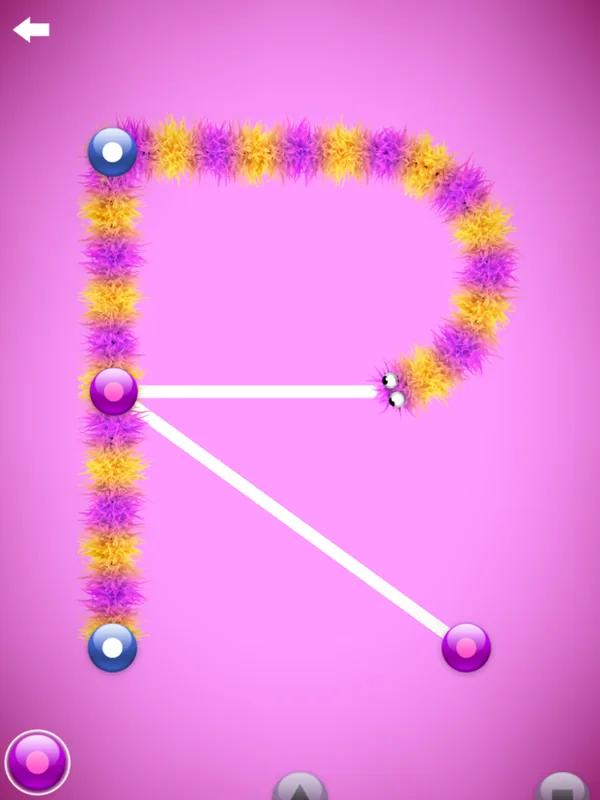
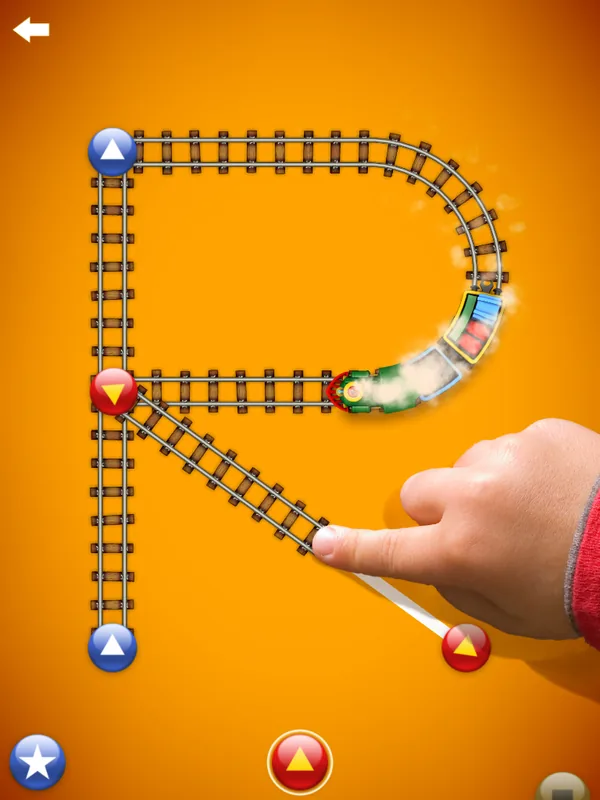
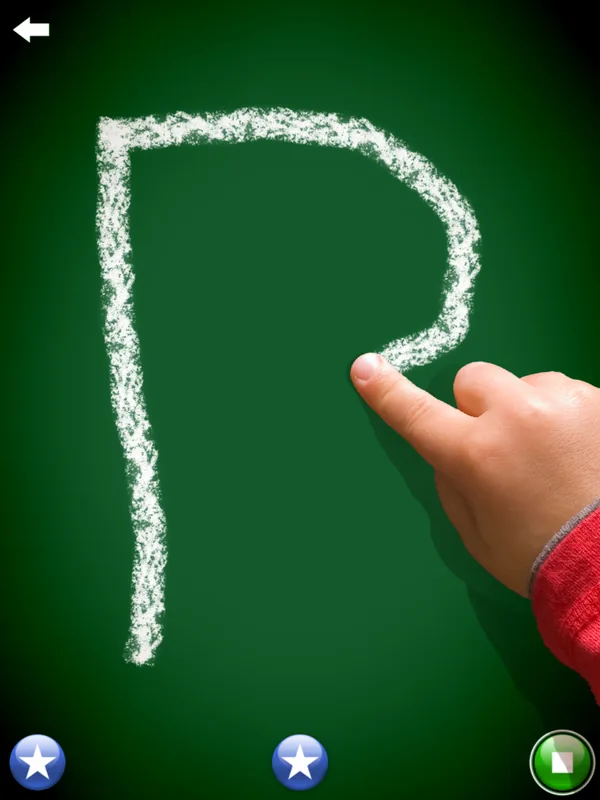
The same letter shapes as this sheet, with instant feedback on every line, animations and stars. Children play, and learn the right formation.