

Help for b and d reversals
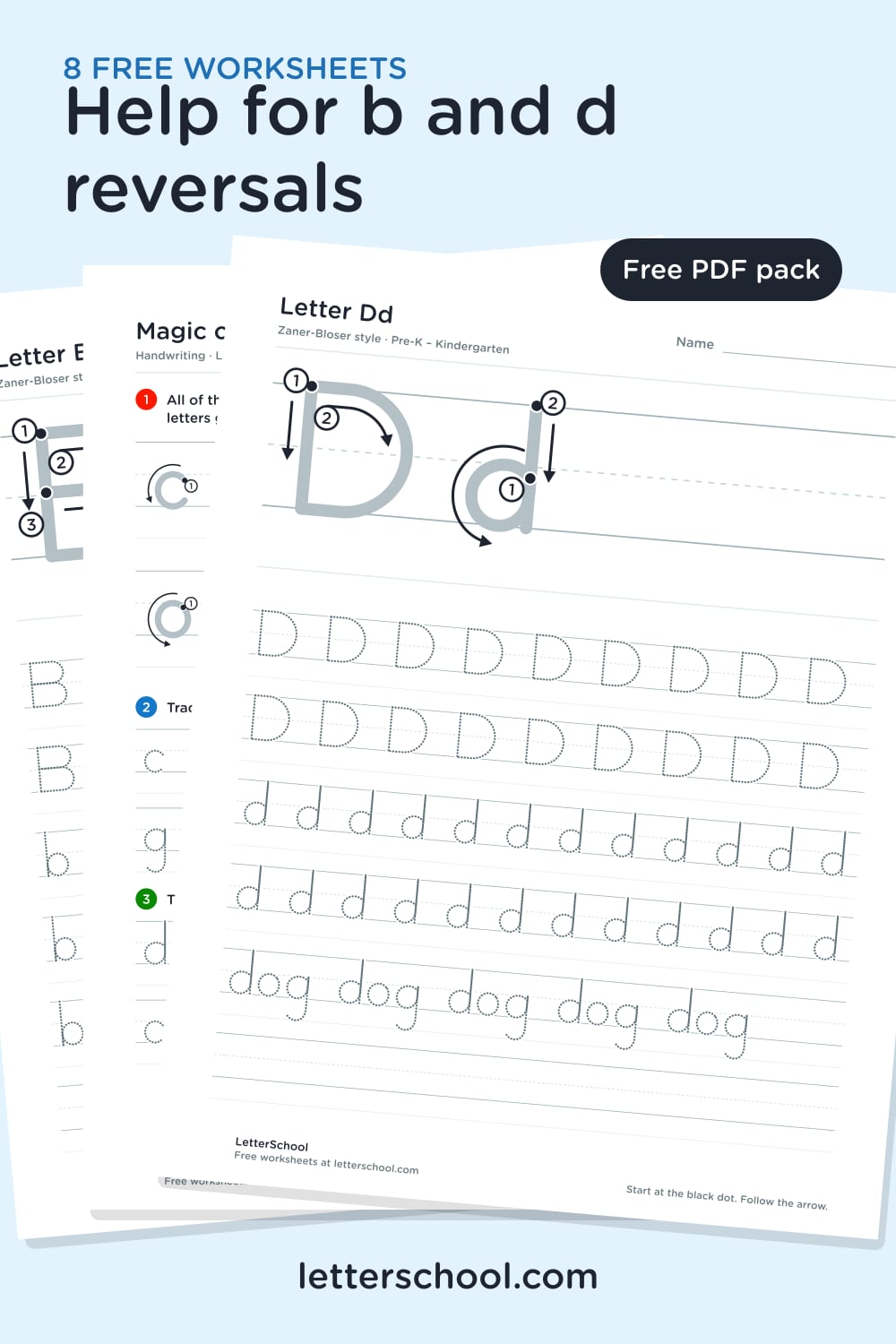
Your child writes d when they mean b, or the other way round. This is one of the most common things young writers do, and it usually goes away with the right kind of practice: practice that starts with how each letter is made.
For: Parents, teachers and occupational therapists of children aged 4 to 7
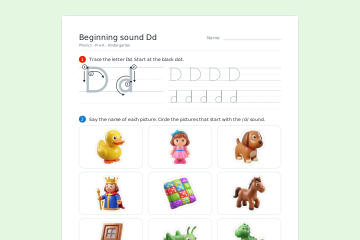
A cover page with the plan, then 8 worksheets in order (9 pages). Free, no sign-up.
Free, no sign-up. US Letter size. Download A4 instead · Open to print
 Save to Pinterest
Why it happens
- b and d are the same shape turned around. Most things in a child’s world stay the same thing when you turn them (a cup facing left is still a cup); letters are the exception, and that takes time to learn.
- Many children reverse letters until about age 7. It is a normal part of learning to write, not on its own a sign of dyslexia.
- Children who start b and d in the same place have nothing to tell them apart. When b always starts with the line and d always starts with the c, the hand learns the difference.
What helps
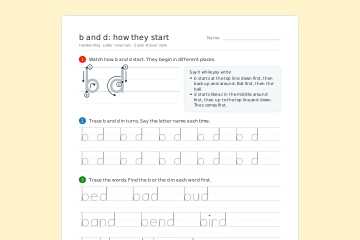
- Teach the start, not the shape: b begins with a line down from the top, d begins with a c in the middle.
- Say it while writing: “bat first, then the ball” for b; “c first, then up and down” for d.
- Separate them in time: practise b for a few days before d, instead of both at once.
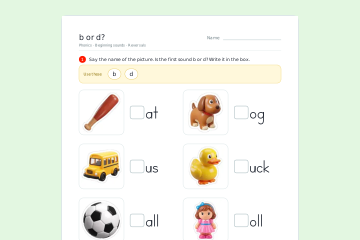
- Use the sounds as well as the shapes: b is made with the lips, d with the tongue.
- Short daily practice (5 to 10 minutes) works better than a long session once a week.
The planstep by step.
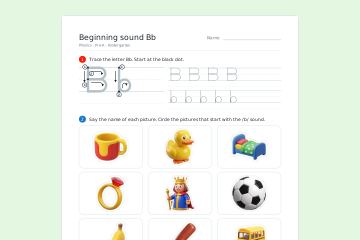
1Days 1–3: b on its own
Only b. Watch the strokes, trace, and say “bat first, then the ball” every time.
2Days 4–6: d on its own
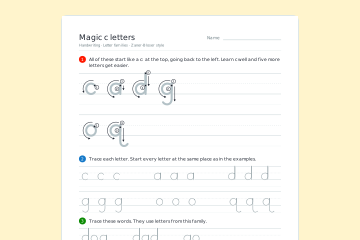
Only d. It starts like c: practise the magic c letters first, then d.
3Days 7–9: side by side
Now both letters together. Trace them in turns and say where each one starts.
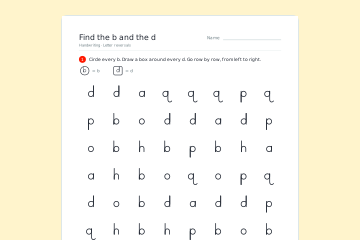
4Days 10–12: tell them apart
Find b and d among look-alike letters, and choose b or d by the sound.
5Days 13–14: in words
Use b and d in real words, then a sentence.
Questions
Questions about b and d reversals
Still have questions? Visit our Help Center or get in touch.
At what age should b and d reversals stop?
Is reversing b and d a sign of dyslexia?
Should I correct every reversal?
Related packs
The LetterSchool app
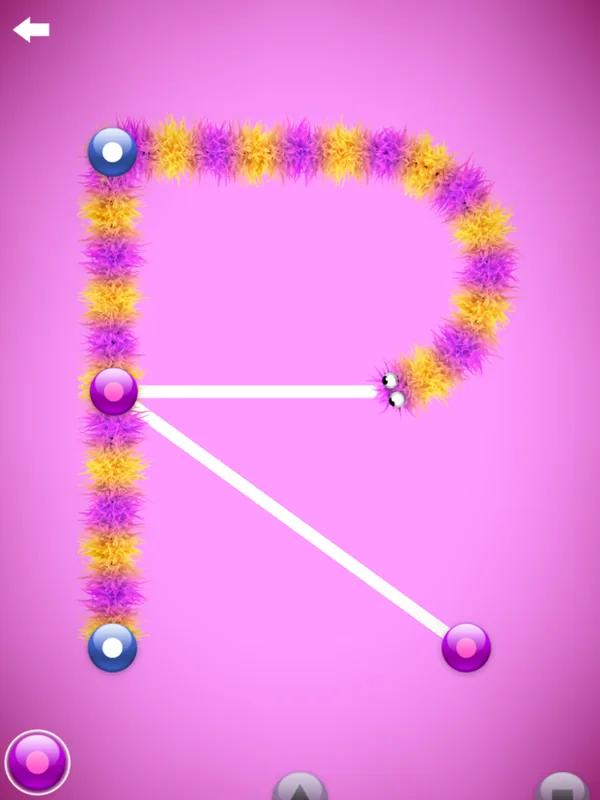
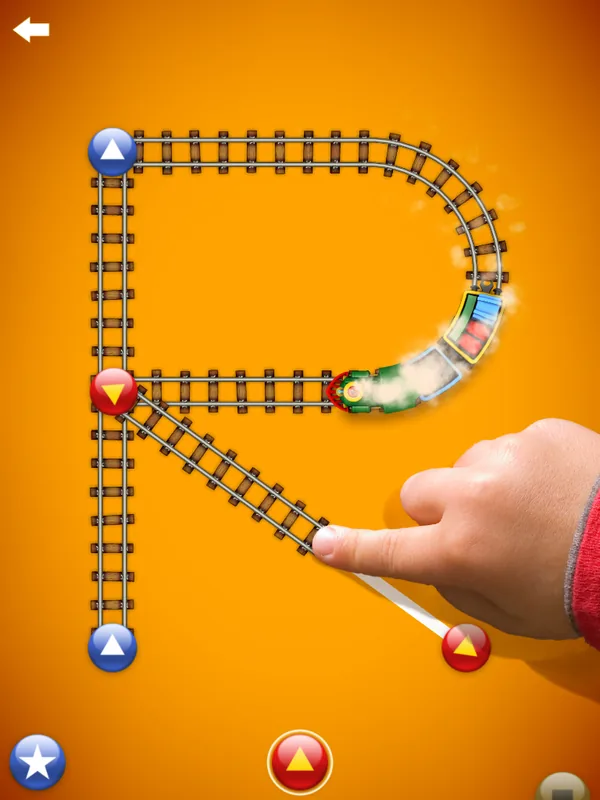
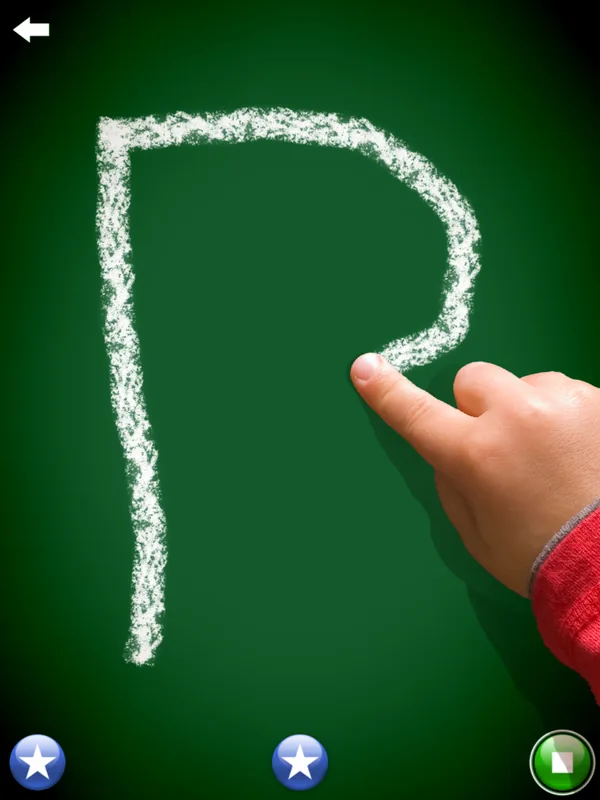
Between worksheets: practise in the app
The same letter shapes as this sheet, with instant feedback on every line, animations and stars. Children play, and learn the right formation.