

Help with learning letter sounds
Your child knows the letter names (or the ABC song) but not the sounds the letters make, and the sounds are what reading needs. Children learn sounds fastest in a set order, starting with letters that quickly make real words.
For: Parents and pre-K to kindergarten teachers
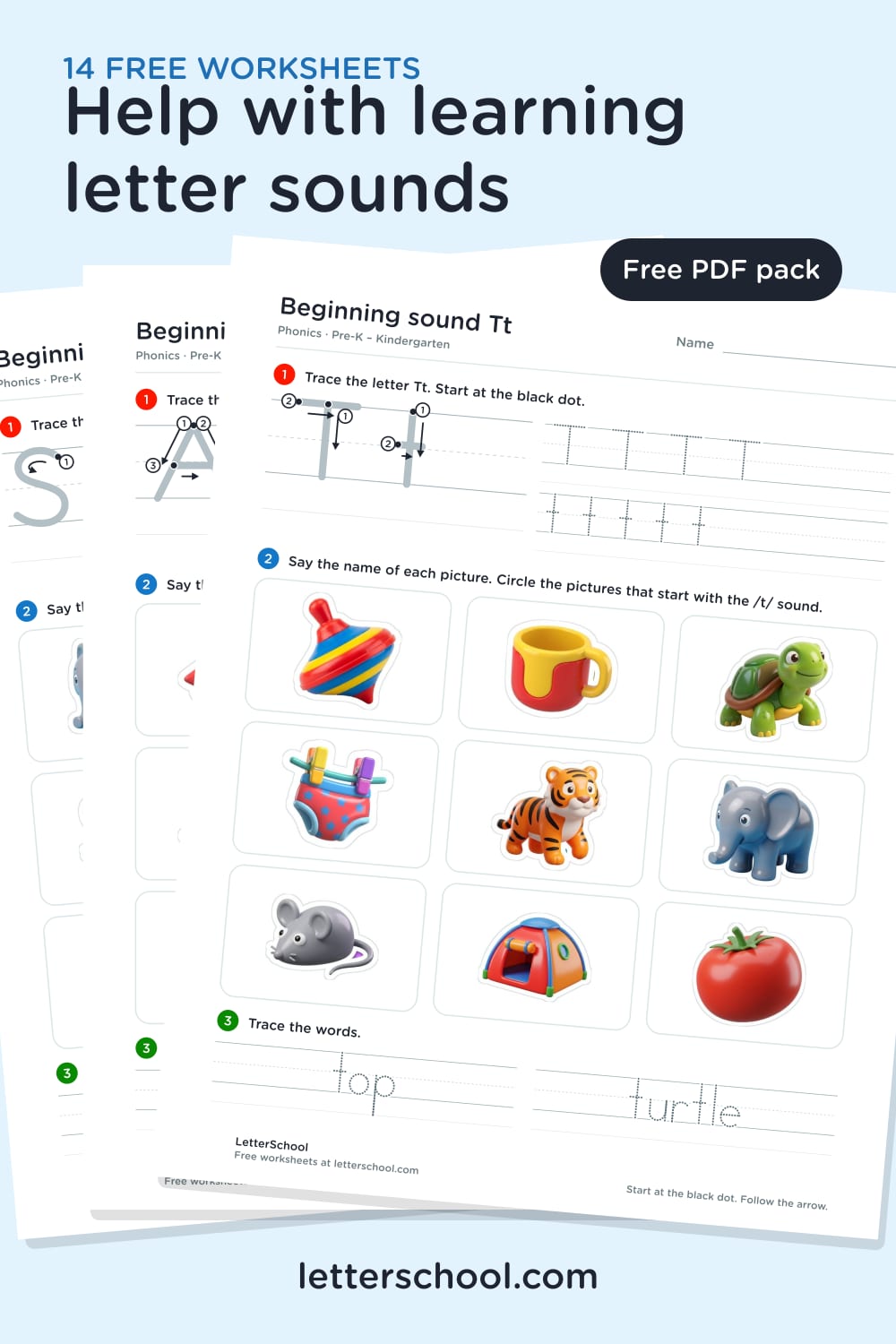
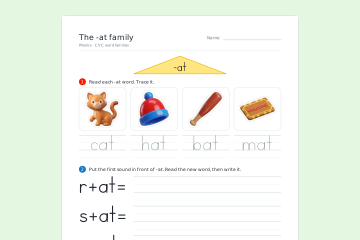
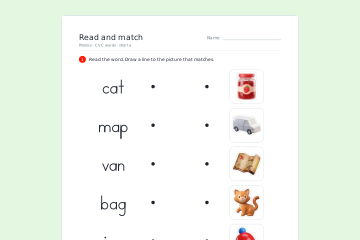
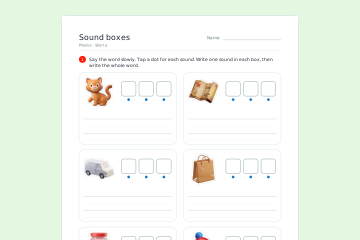
A cover page with the plan, then 14 worksheets in order (15 pages). Free, no sign-up.
Free, no sign-up. US Letter size. Download A4 instead · Open to print
 Save to Pinterest
Why it happens
- Letter names and letter sounds are different: the name of w is “double-u”, its sound is /w/. Children need the sounds to read.
- In ABC order, the first letters do not make many words. Many phonics programs start with s, a, t, p, i, n because these alone make words like sat, pin and tap.
- Hearing a sound at the start of a word is the first step; hearing it at the end and in the middle comes later.
What helps
- Teach the sound with the letter: “this is s, it says sss”. Keep the sound short: /m/, not “muh”.
- Start with s, a, t, p, i, n, then go on through the alphabet.
- Say a word and stretch the first sound: sss-sun.
- Once a few sounds are known, blend them into words straight away: s-a-t, sat.
The planstep by step.
1Weeks 1–2: s, a, t, p
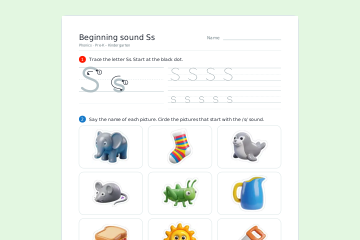
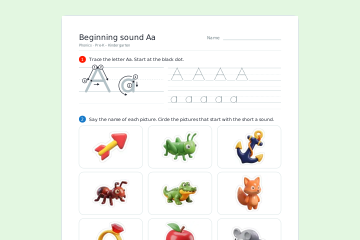
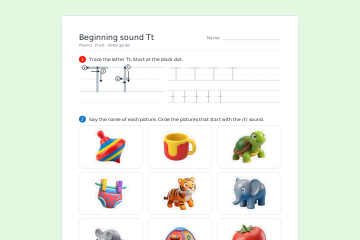
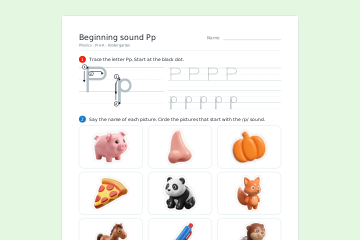
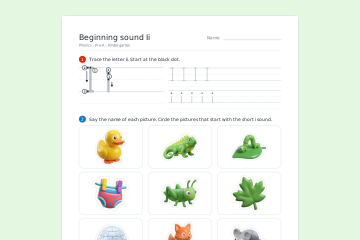
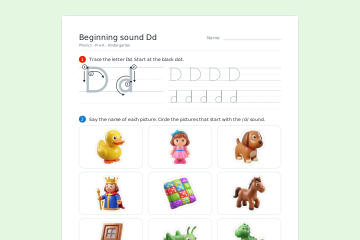
One sound every two or three days. Circle the pictures that start with the sound.
2Weeks 3–4: i, n, m, d
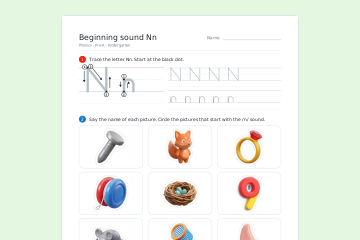
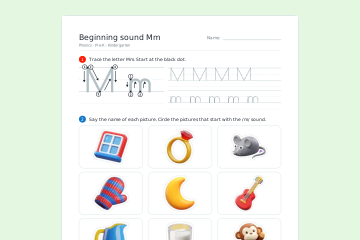
Four more sounds; with these your child can read words like sit, man and pin.
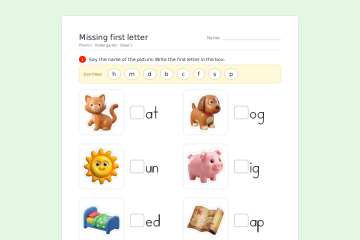
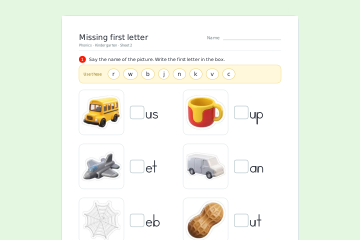
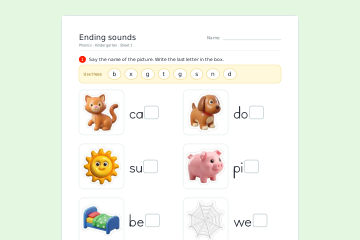
3Weeks 5–6: hear and write
Write the first letter, then the last letter of words.
4Week 7: first words
Blend the sounds into short words.
Questions
Questions about learning letter sounds
Still have questions? Visit our Help Center or get in touch.
Should I teach letter names or letter sounds first?
Why s, a, t, p, i, n first?
Related packs
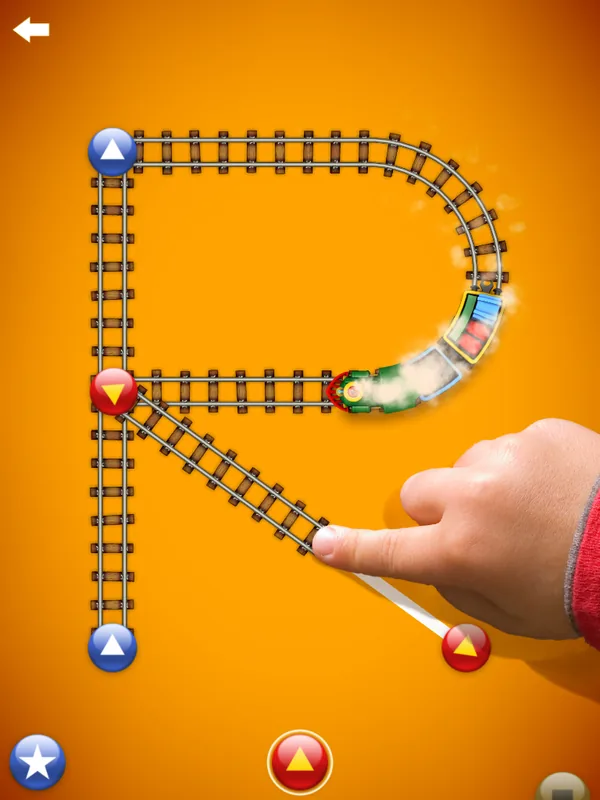
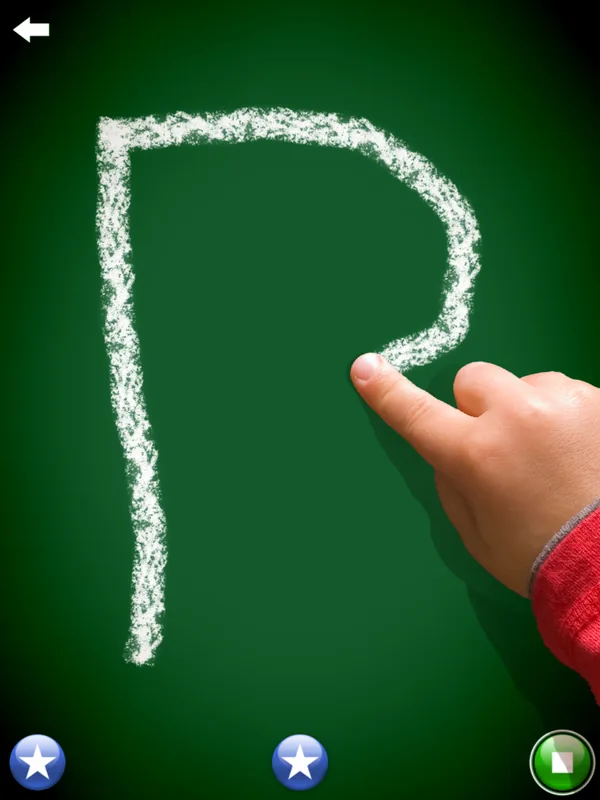
The LetterSchool app
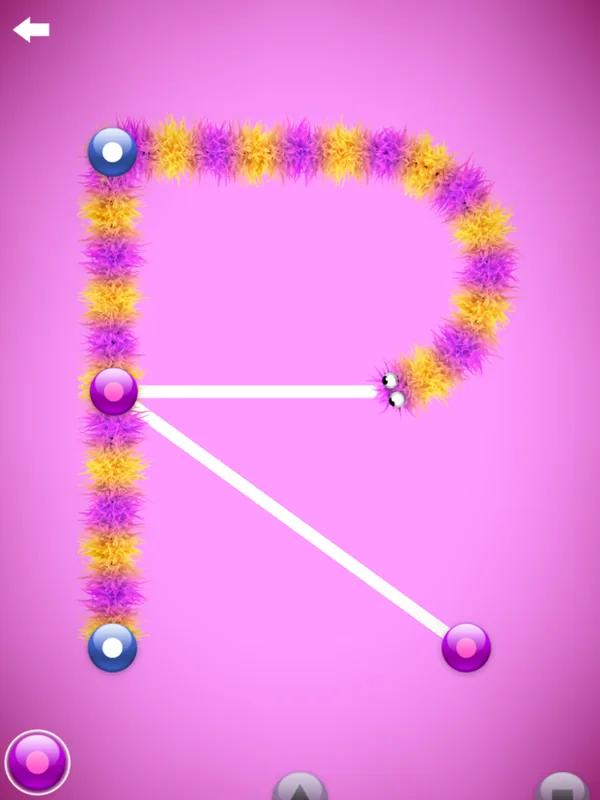
Between worksheets: practise in the app
The same letter shapes as this sheet, with instant feedback on every line, animations and stars. Children play, and learn the right formation.