

Rhyming and hearing the sounds in words
Your child cannot tell which words rhyme, or which sound a word starts with. Hearing the sounds inside words (phonological awareness) is a key step before reading, and it can be taught.
For: Parents and teachers of children aged 3 to 6
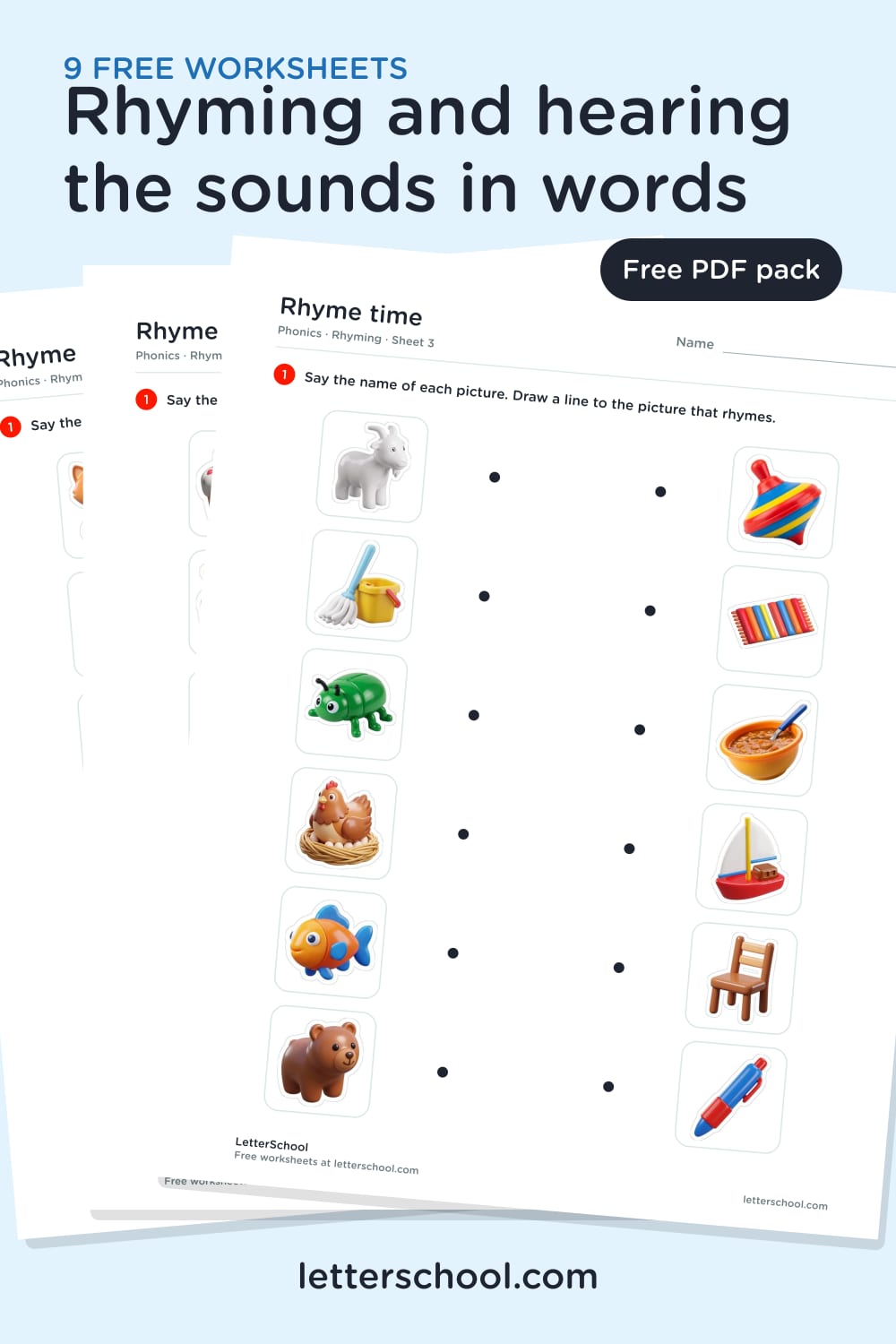
A cover page with the plan, then 9 worksheets in order (10 pages). Free, no sign-up.
Free, no sign-up. US Letter size. Download A4 instead · Open to print
 Save to Pinterest
Why it happens
- Words sound like one whole to young children; noticing the parts takes teaching.
- Rhymes and syllables are easier to hear than single sounds.
- Children who hear the sounds in words find it much easier to link them to letters.
What helps
- Play with sounds out loud: rhyming songs, silly rhymes, I spy with sounds.
- Clap syllables in names.
- Stretch words: “mmmaaannn”.
- Use pictures, so reading is not needed yet.
The planstep by step.
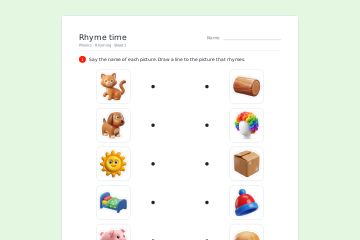
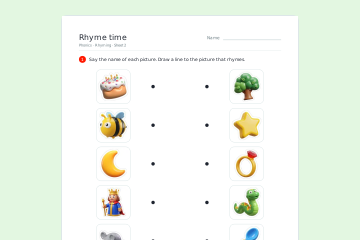
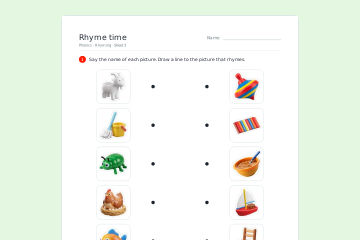
1Rhyme
Which pictures rhyme?
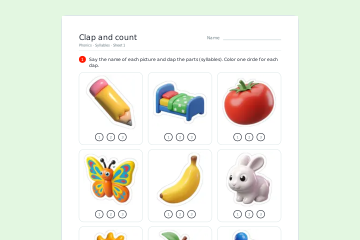
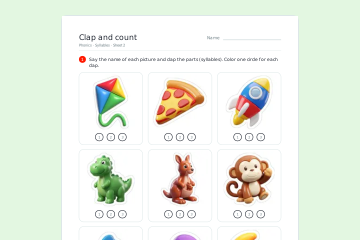
2Syllables
Clap and count.
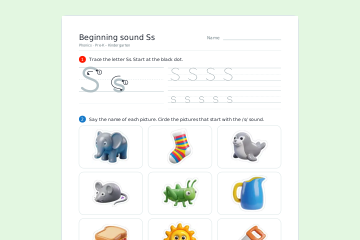
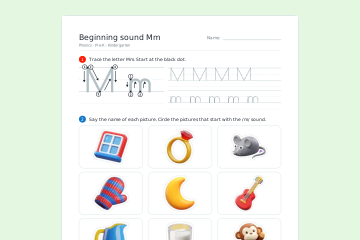
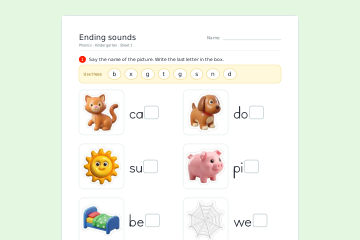
3First and last sounds
Hear the first and the last sound.
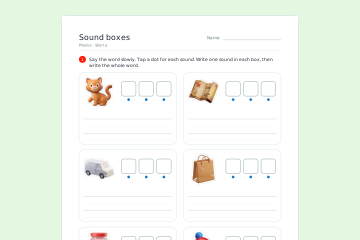
4Every sound
Push a counter for each sound.
When to ask for help
Ask the teacher or a speech and language therapist (speech-language pathologist) if your child still cannot hear rhymes or first sounds by the end of kindergarten, or if speech is hard to understand.
These worksheets are practice materials, not a diagnosis or a treatment. Every child develops at their own pace. If you are worried, talk to your child’s teacher, doctor or a specialist.
Questions
Questions about rhyming and hearing sounds
Still have questions? Visit our Help Center or get in touch.
What is the difference between phonological awareness and phonics?
Related packs
Sources
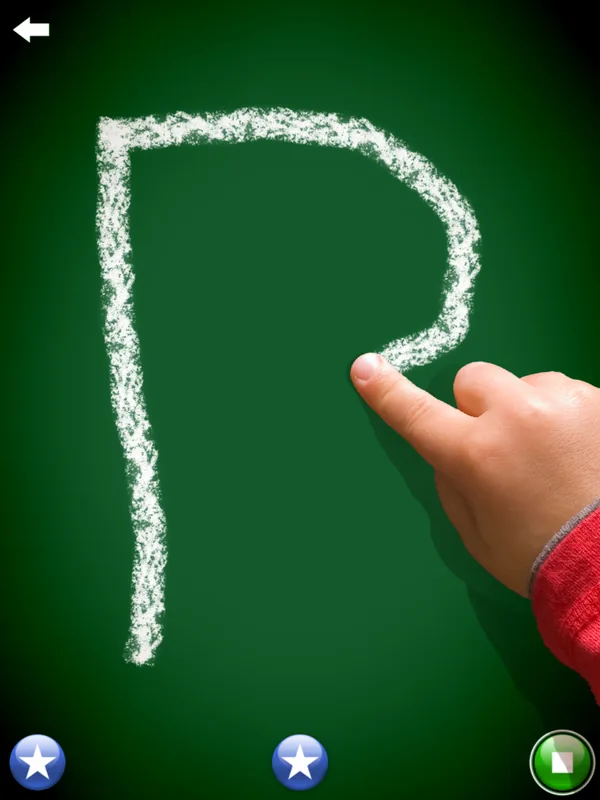
The LetterSchool app
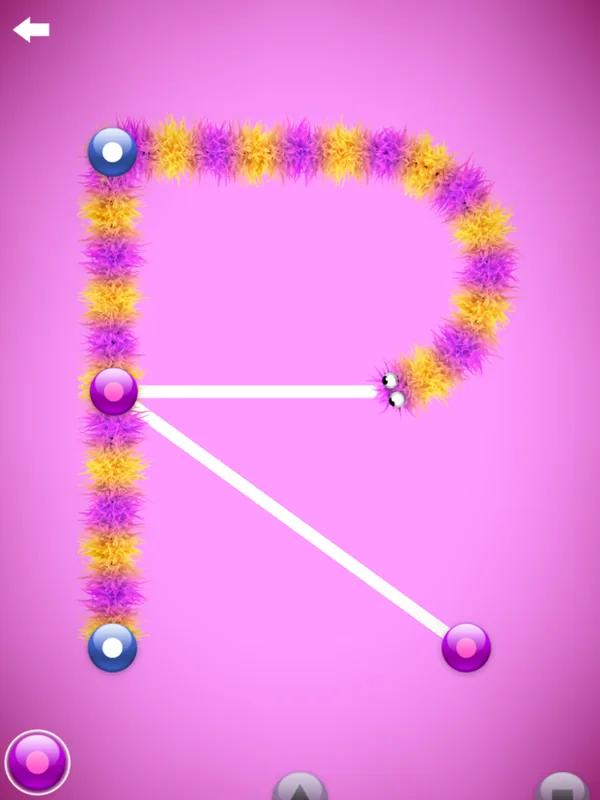
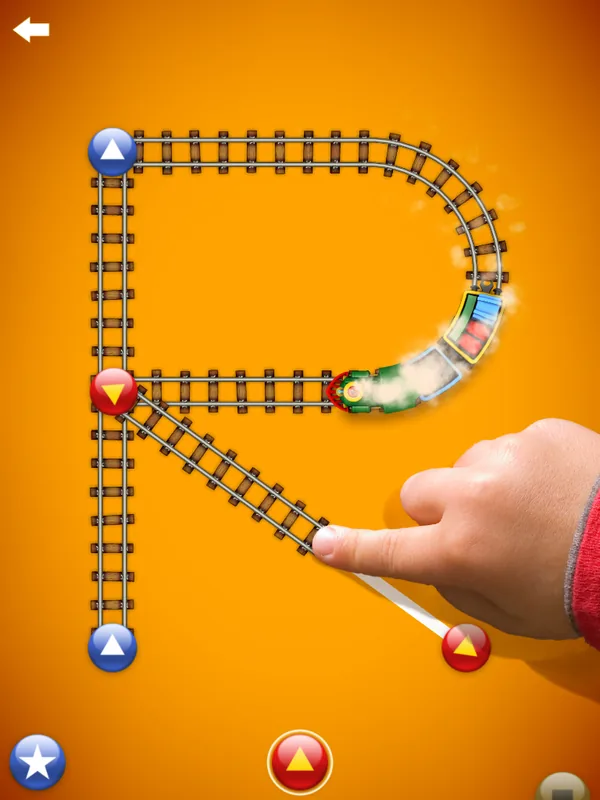
Between worksheets: practise in the app
The same letter shapes as this sheet, with instant feedback on every line, animations and stars. Children play, and learn the right formation.