

Late talkers: supporting early reading and writing
Your toddler says fewer words than other children the same age. Many late talkers catch up, but talking is the foundation of reading, so it is worth supporting language now and checking early.
For: Parents of children aged 2 to 5
A cover page with the plan, then 7 worksheets in order (8 pages). Free, no sign-up.
Free, no sign-up. US Letter size. Download A4 instead · Open to print
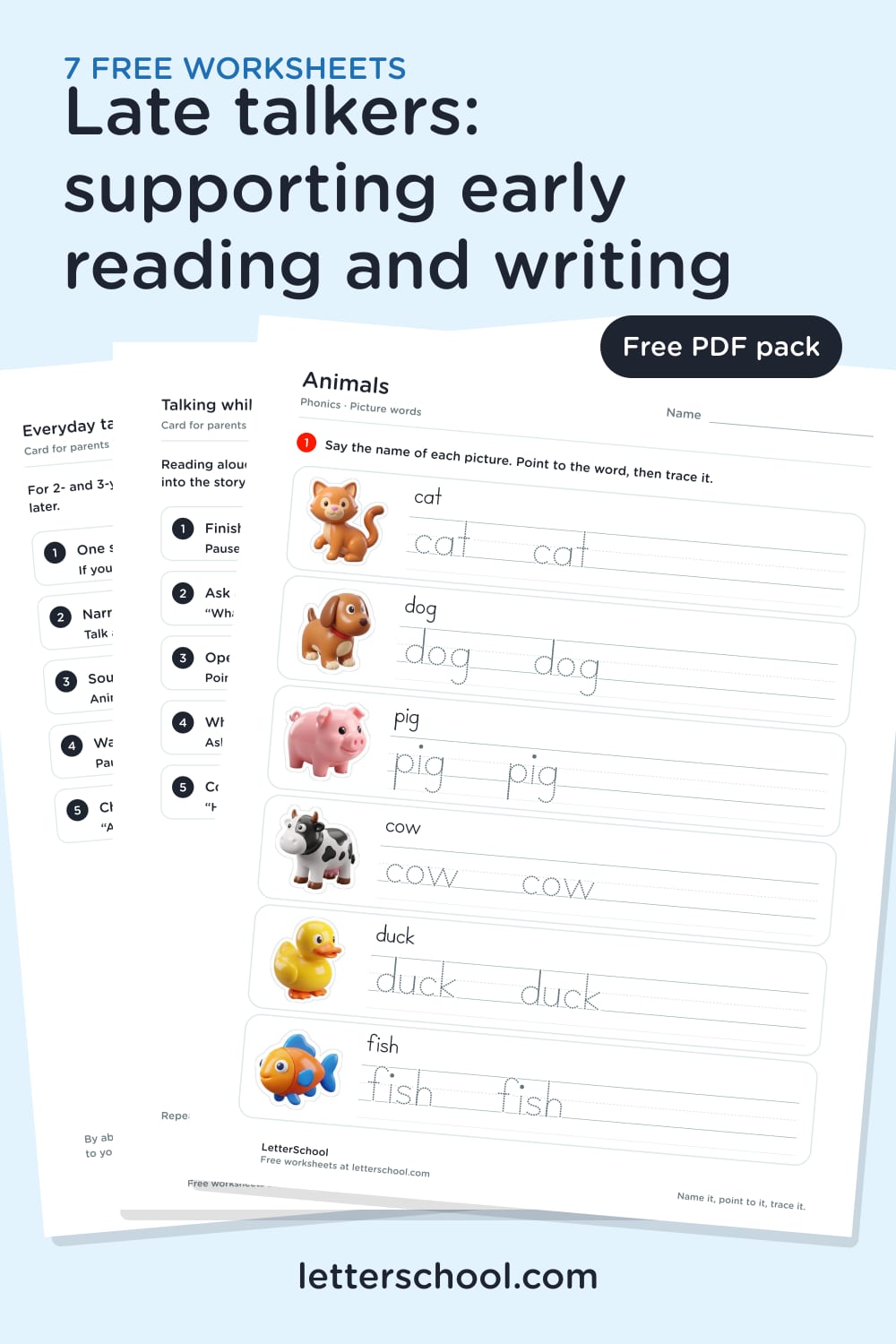 Save to Pinterest
Why it happens
- Speaking, listening, reading and writing all build on language.
- Some late talkers catch up by school age; some continue to have language difficulties.
- Children who understand words well and use gestures often do better.
What helps
- Talk about what your child is doing, in short sentences.
- Wait: give time to answer.
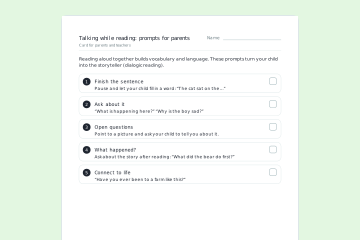
- Read picture books together and name things.
- Sing songs and rhymes.
- Ask for a hearing test if not done recently.
The planstep by step.
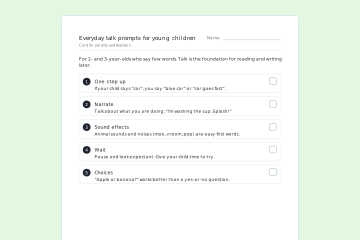
1Talk prompts
Ways to get talking during play and reading.
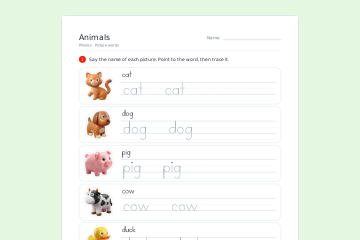
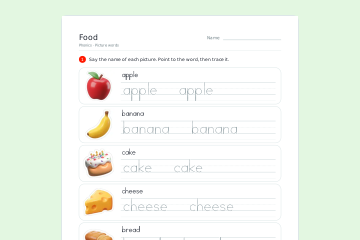
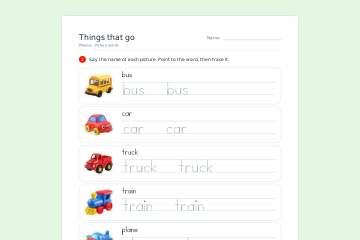
2Words to point at
Picture word pages to name and point.
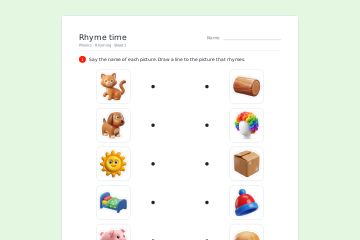
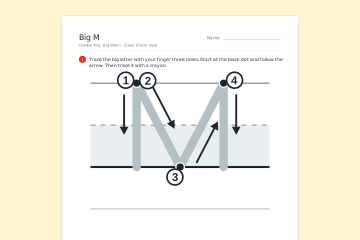
3Sounds and rhymes
Rhyming pictures and first letters.
When to ask for help
Ask your doctor or a speech and language therapist (speech-language pathologist) if your child is not saying words by 18 months, not combining two words by 2, loses words they had, or if you are worried about hearing.
These worksheets are practice materials, not a diagnosis or a treatment. Every child develops at their own pace. If you are worried, talk to your child’s teacher, doctor or a specialist.
When is a toddler a late talker?
Related packs
Sources



The LetterSchool app
Between worksheets: practise in the app
The same letter shapes as this sheet, with instant feedback on every line, animations and stars. Children play, and learn the right formation.