

Building vocabulary in young children
Your child uses few words, or does not know common words for everyday things. Vocabulary grows mainly from talking and reading together, and it is one of the strongest supports for later reading.
For: Parents and teachers of children aged 3 to 7
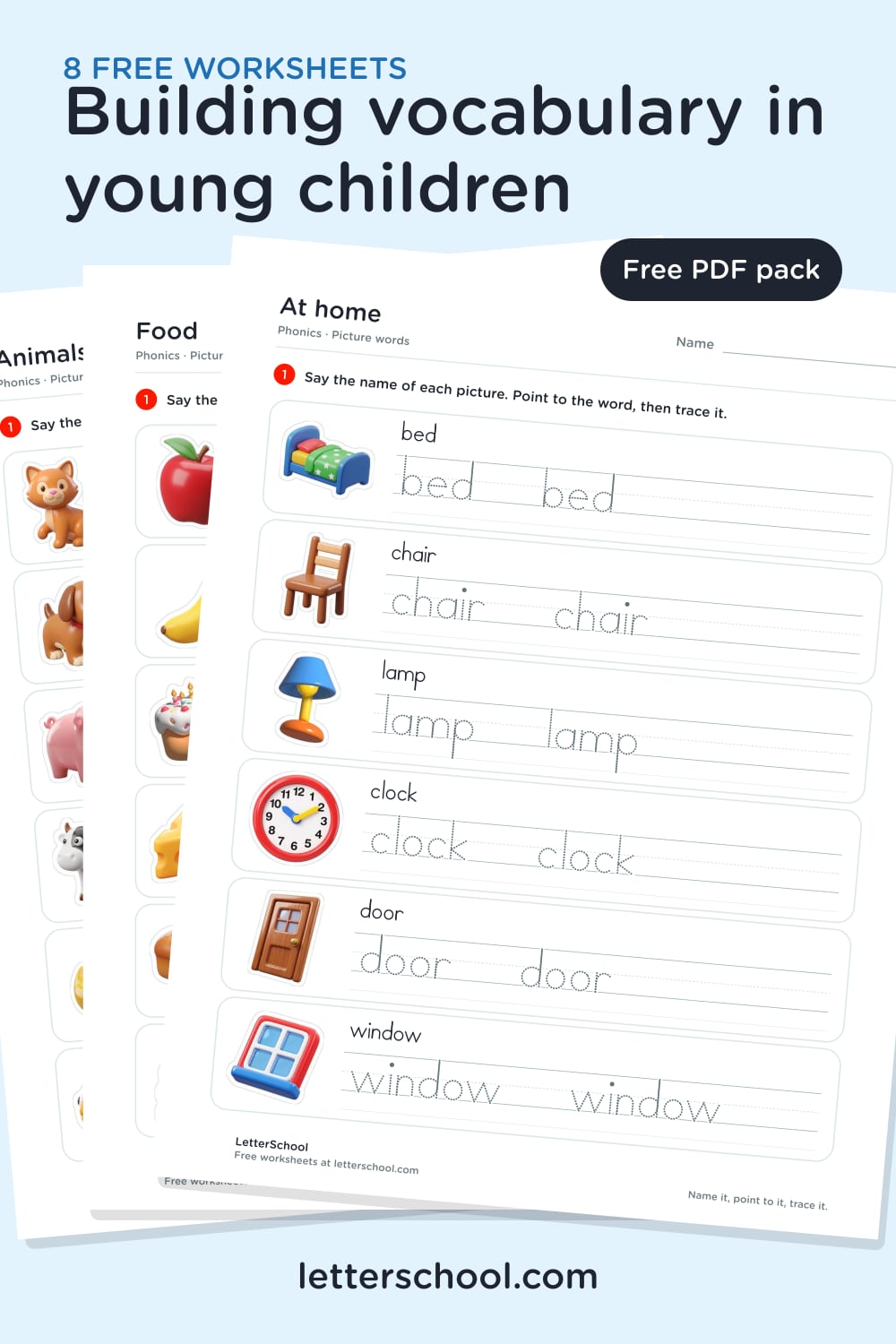
A cover page with the plan, then 8 worksheets in order (9 pages). Free, no sign-up.
Free, no sign-up. US Letter size. Download A4 instead · Open to print
 Save to Pinterest
Why it happens
- Children learn words by hearing them many times in conversation and books.
- Words heard in books are richer than words in everyday talk.
- Knowing a word makes it much easier to read and understand it.
What helps
- Talk about pictures: name, describe, compare.
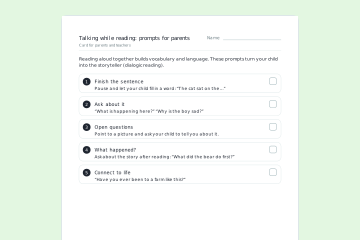
- Read together and ask open questions (dialogic reading).
- Use new words again during the day.
- Group words by topic: food, animals, home.
The planstep by step.
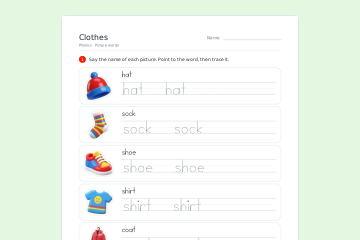
1Picture words
Words by theme.
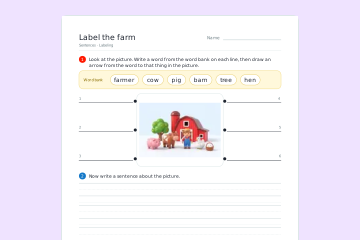
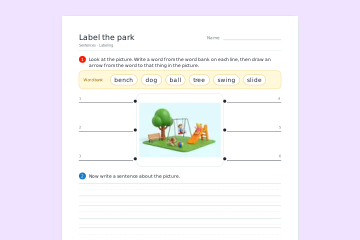
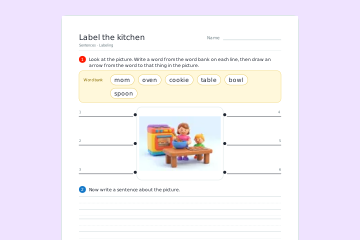
2Label it
Label the things in a scene.
3Talk about books
Questions for reading together.
When to ask for help
Ask a speech and language therapist (speech-language pathologist) if your child understands or uses far fewer words than other children the same age, or if you are worried about their talking.
These worksheets are practice materials, not a diagnosis or a treatment. Every child develops at their own pace. If you are worried, talk to your child’s teacher, doctor or a specialist.
How can I build my child’s vocabulary?
Related packs
Sources



The LetterSchool app
Between worksheets: practise in the app
The same letter shapes as this sheet, with instant feedback on every line, animations and stars. Children play, and learn the right formation.