

Learning to read and write in English as a new language
Your child is learning to read and write in English while speaking another language at home. Being multilingual is a strength. Children who learn to read in a new language benefit from picture support, lots of talk and the same clear phonics teaching as everyone.
For: Teachers and parents of multilingual children aged 3 to 8
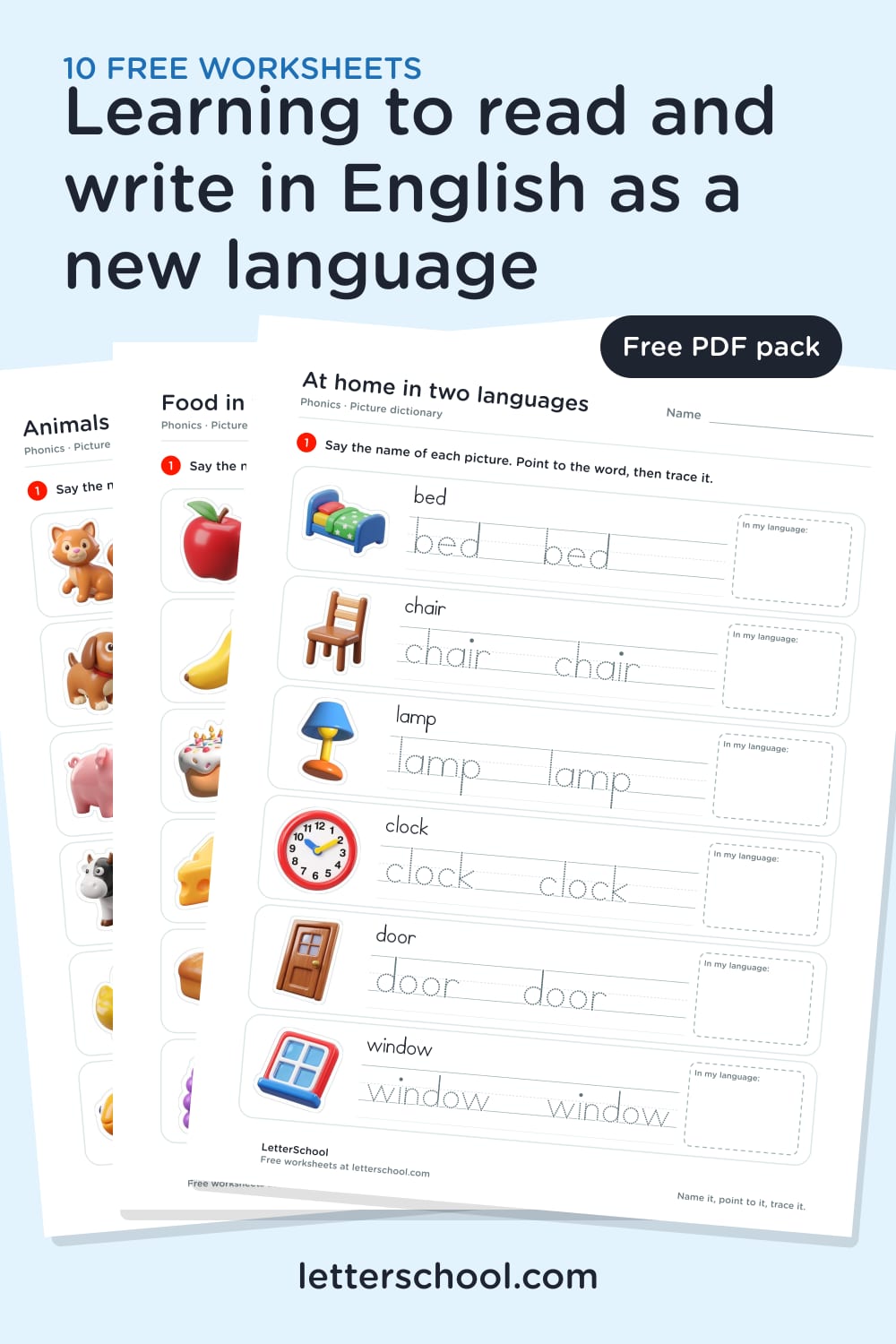
A cover page with the plan, then 10 worksheets in order (11 pages). Free, no sign-up.
Free, no sign-up. US Letter size. Download A4 instead · Open to print
 Save to Pinterest
Why it happens
- Skills from the home language (like knowing what reading is for) carry over to English.
- Vocabulary in English often needs extra attention.
- Some English sounds do not exist in other languages, so they need more practice.
What helps
- Keep reading and talking in the home language too.
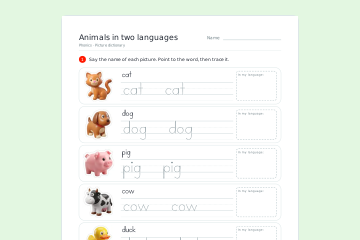
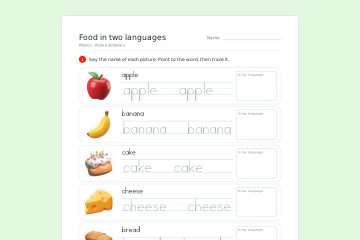
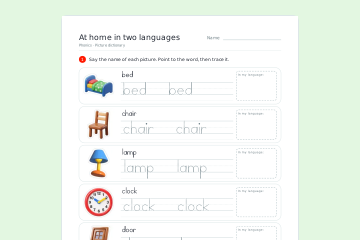
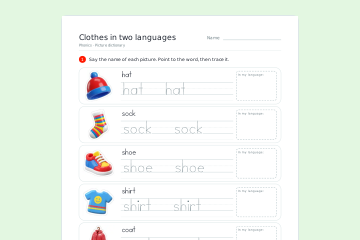
- Picture dictionaries with words in both languages.
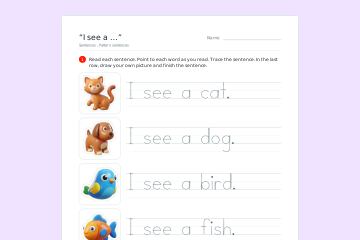
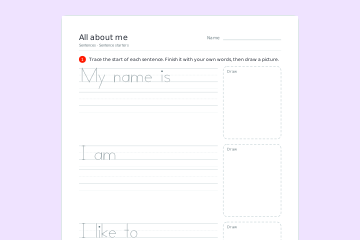
- Sentence frames to support speaking and writing.
- Teach phonics explicitly; it works for English learners too.
- Let children draw and label to show what they know.
The planstep by step.
1My picture dictionary
English and home-language words.
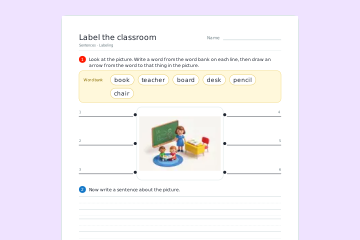
2Label and say
Labeled scenes and sentence frames.
3Sounds and letters
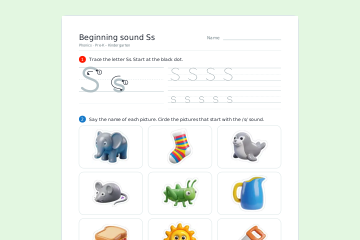
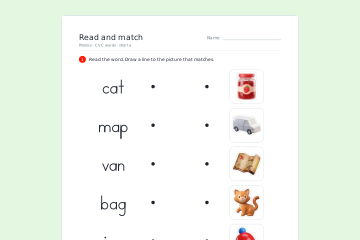
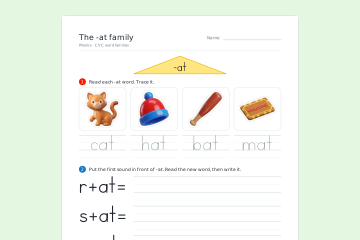
Letter sounds and CVC words.
When to ask for help
If you are worried about your child’s language, ask for an assessment that includes the home language: difficulties that show in both languages are worth checking with a speech and language therapist (speech-language pathologist).
These worksheets are practice materials, not a diagnosis or a treatment. Every child develops at their own pace. If you are worried, talk to your child’s teacher, doctor or a specialist.
Questions
Questions about learning in a new language
Still have questions? Visit our Help Center or get in touch.
Should we stop speaking our home language to help English?
Related packs
Sources
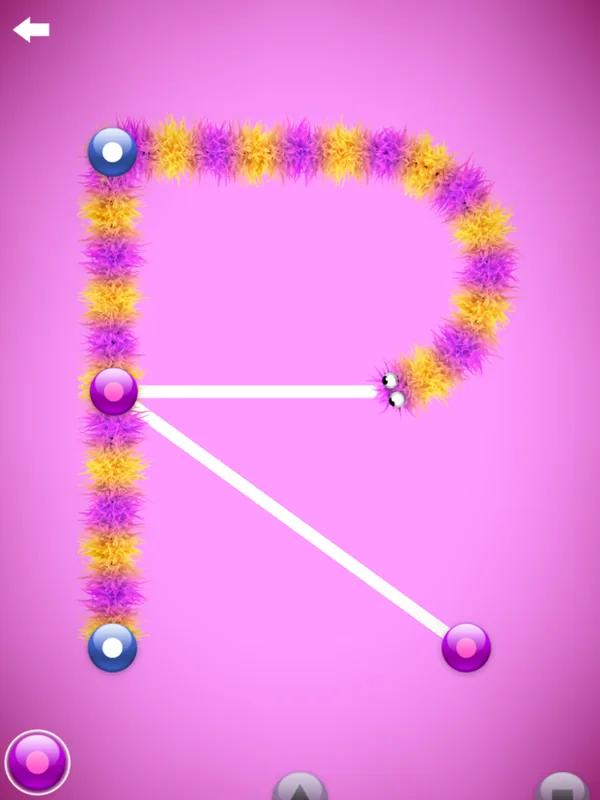
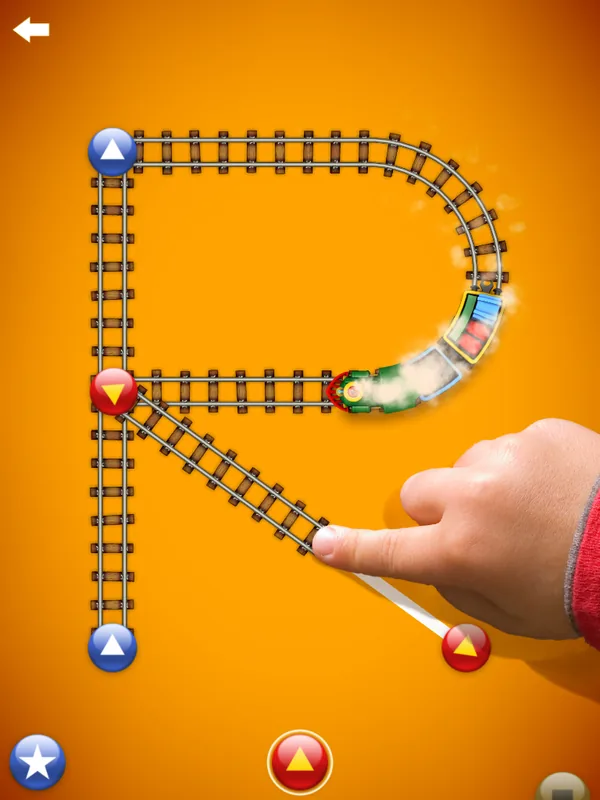
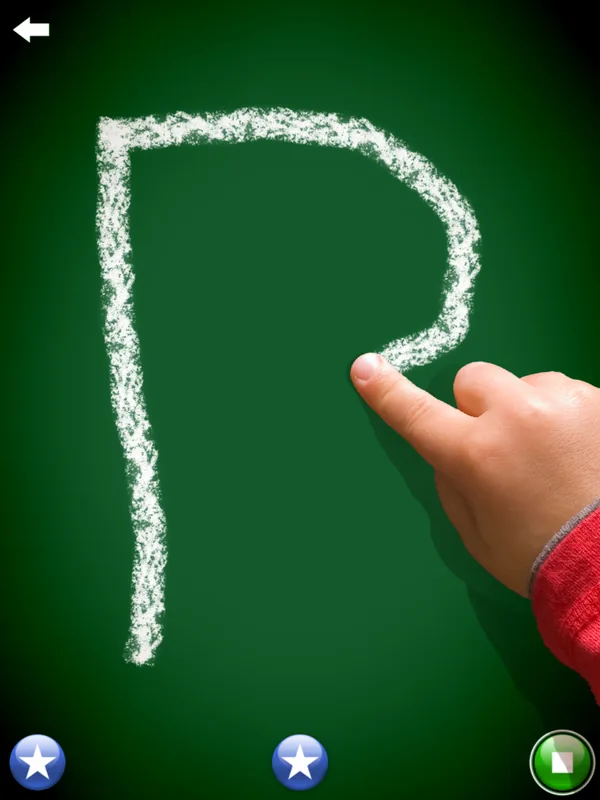
The LetterSchool app
Between worksheets: practise in the app
The same letter shapes as this sheet, with instant feedback on every line, animations and stars. Children play, and learn the right formation.