

Developmental language disorder (DLD), speech and reading
Your child finds it hard to understand or use language: finding words, making sentences, following instructions. Developmental language disorder (DLD) is common and often missed. Children with DLD are at higher risk of reading and writing difficulties.
For: Parents, teachers and therapists of children aged 4 to 8
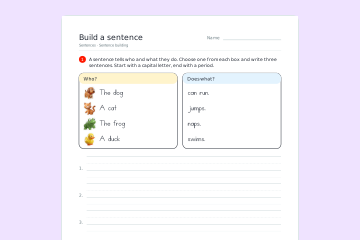
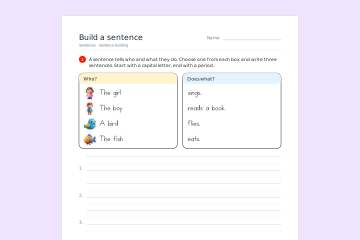
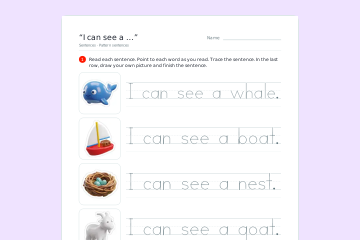
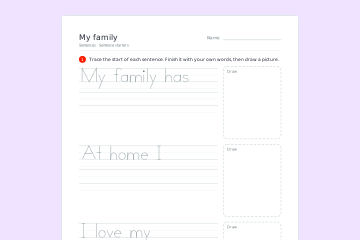
A cover page with the plan, then 11 worksheets in order (12 pages). Free, no sign-up.
Free, no sign-up. US Letter size. Download A4 instead · Open to print
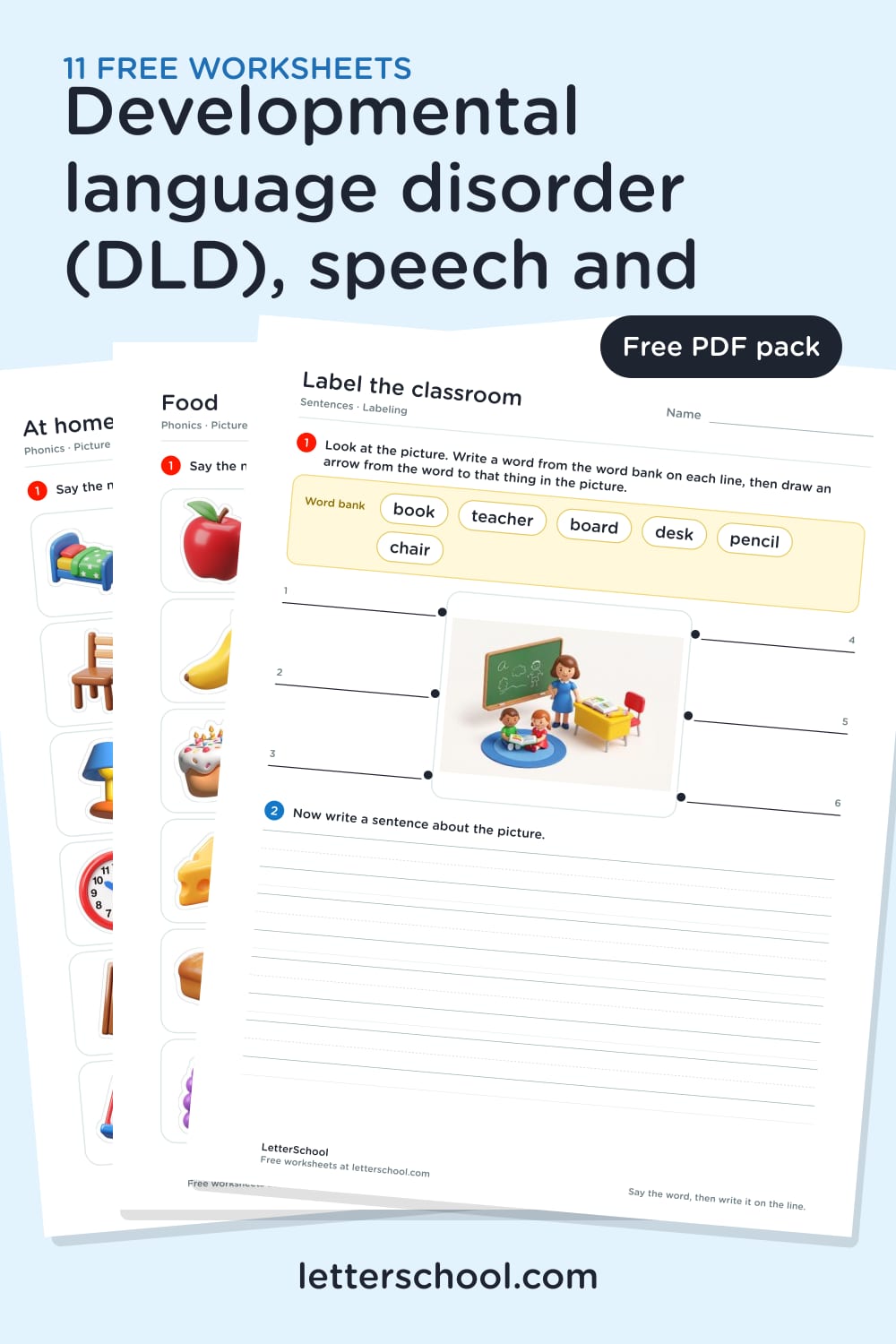 Save to Pinterest
Why it happens
- Reading builds on spoken language: vocabulary, grammar and understanding.
- Children with DLD may decode words but find it hard to understand what they read.
- Making sentences out loud is hard, so writing sentences is harder still.
What helps
- Teach new words with pictures and use them many times.
- Sentence frames and starters to build sentences.
- Say it before writing it.
- Use visuals for instructions and story order.
- Work with a speech and language therapist.
The planstep by step.
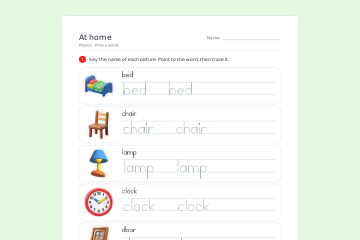
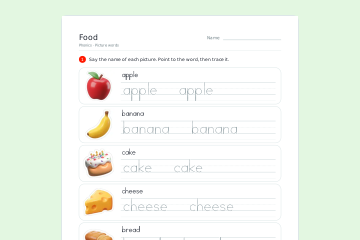
1Words
Picture words and labels.
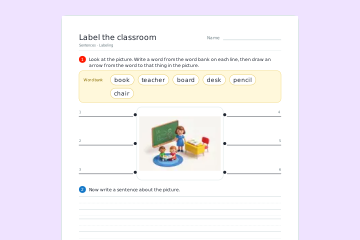
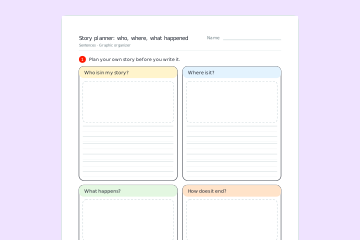
2Sentences
Who + does what, sentence frames.
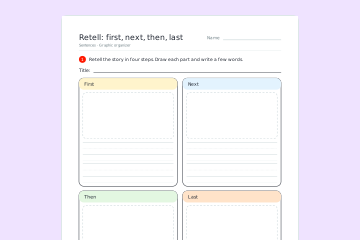
3Stories
Retell in order with pictures.
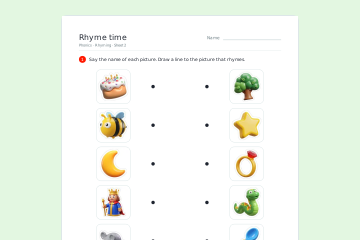
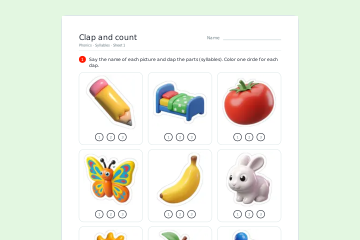
4Sounds
Rhyme and syllables.
When to ask for help
Ask a speech and language therapist (speech-language pathologist) if your child has trouble understanding what people say, finding words or making sentences, compared with other children the same age.
These worksheets are practice materials, not a diagnosis or a treatment. Every child develops at their own pace. If you are worried, talk to your child’s teacher, doctor or a specialist.
What is DLD?
Related packs
Sources



The LetterSchool app
Between worksheets: practise in the app
The same letter shapes as this sheet, with instant feedback on every line, animations and stars. Children play, and learn the right formation.