

Starting cursive: a 4-week plan
Your child is ready to learn cursive, or the school has started it, and you want a clear path. Cursive is easiest when children learn the joining movement first, then a few letters, and join words early on.
For: Parents and 2nd and 3rd grade teachers
A cover page with the plan, then 11 worksheets in order (12 pages). Free, no sign-up.
Free, no sign-up. US Letter size. Download A4 instead · Open to print
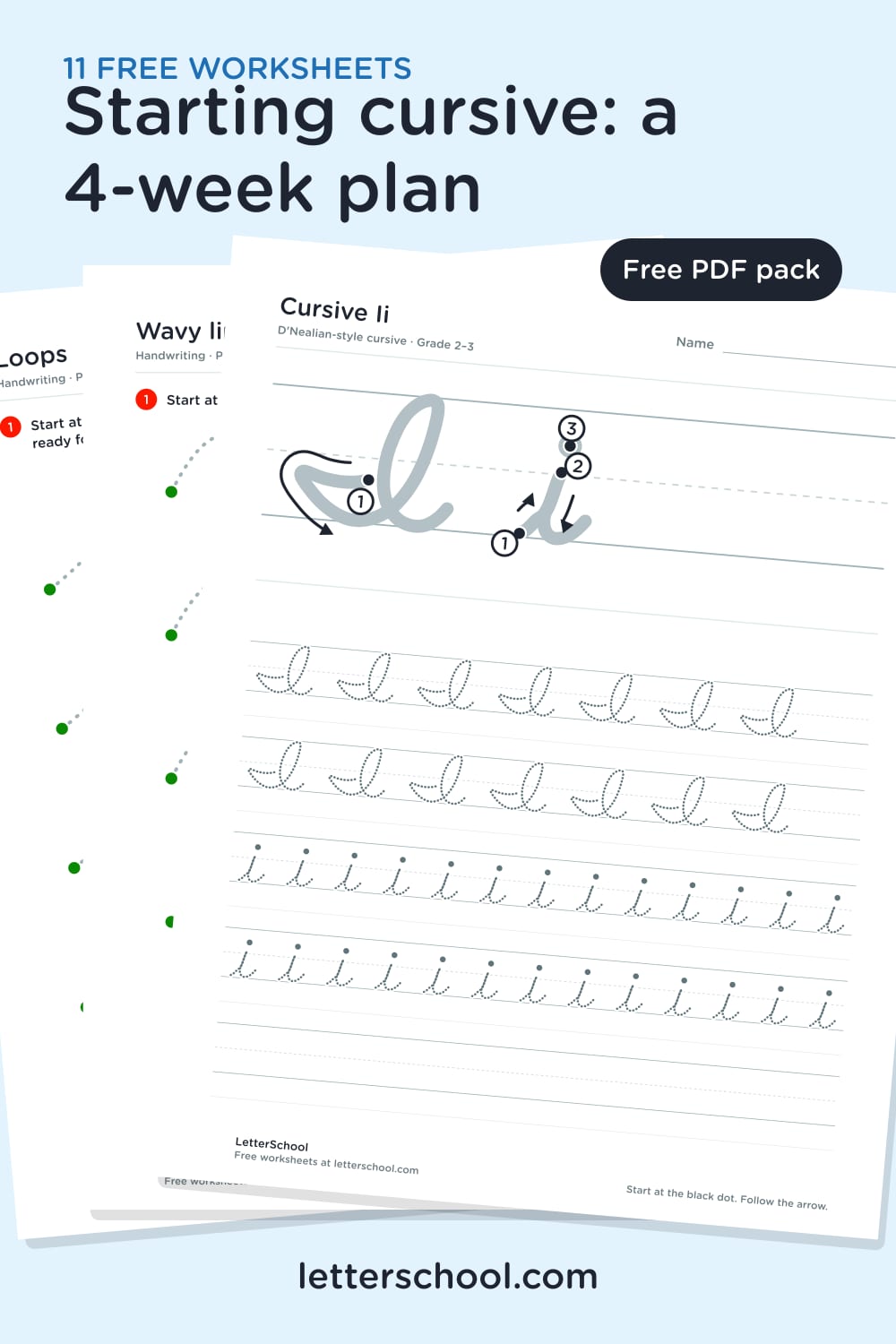 Save to Pinterest
Why it happens
- In cursive the pencil stays on the paper inside a word. That joining movement is new and needs its own practice.
- Many cursive letters start with the same upstroke, so they can be learned in groups.
- Joining real words early keeps it meaningful and shows why cursive is faster.
What helps
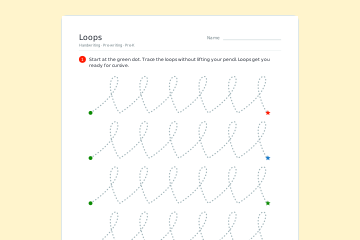
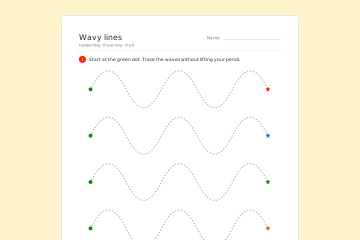
- Warm up with loops and waves: these are the movements of cursive.
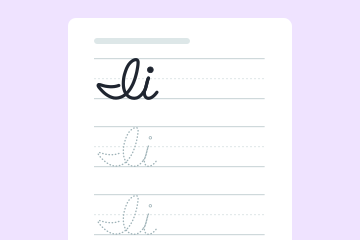
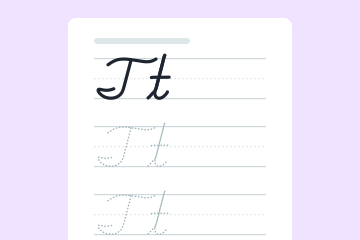
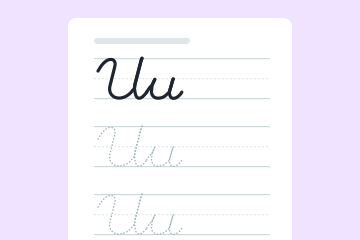
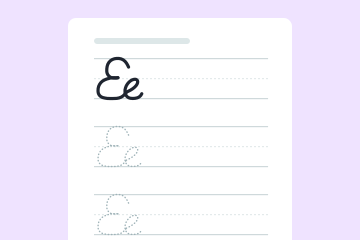
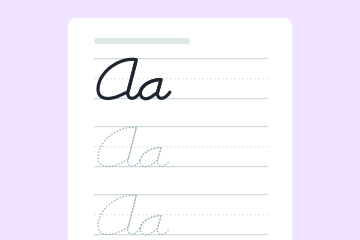
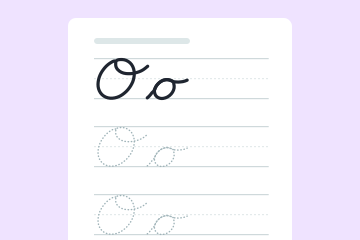
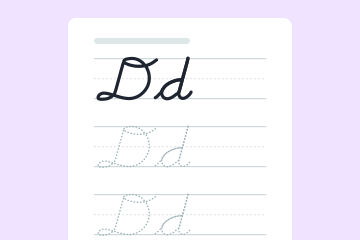
- Start with letters that share an upstroke (i, t, u, w, e, l), then the c-letters (a, c, d, g, o, q).
- Join two-letter words as soon as possible: it, at, up, in.
- Dots and crosses come at the end of the word, after the pencil leaves the paper.
The planstep by step.
1Week 1: the movement
Loops and waves without lifting the pencil.
2Week 2: first letters
Letters with the same upstroke.
3Week 3: c-letters
Letters that start like a c.
4Week 4: words and sentences
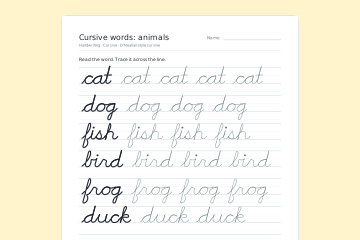
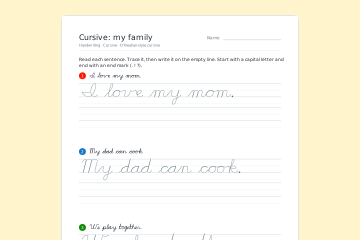
Joined words, then sentences.
Questions
Questions about starting cursive
Still have questions? Visit our Help Center or get in touch.
When do children learn cursive?
D’Nealian-style or HWT-style cursive?
Related packs
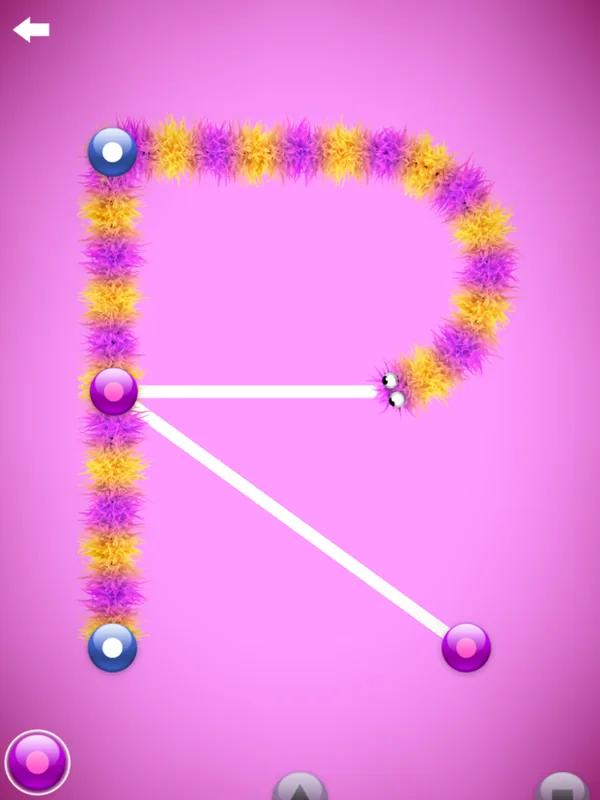
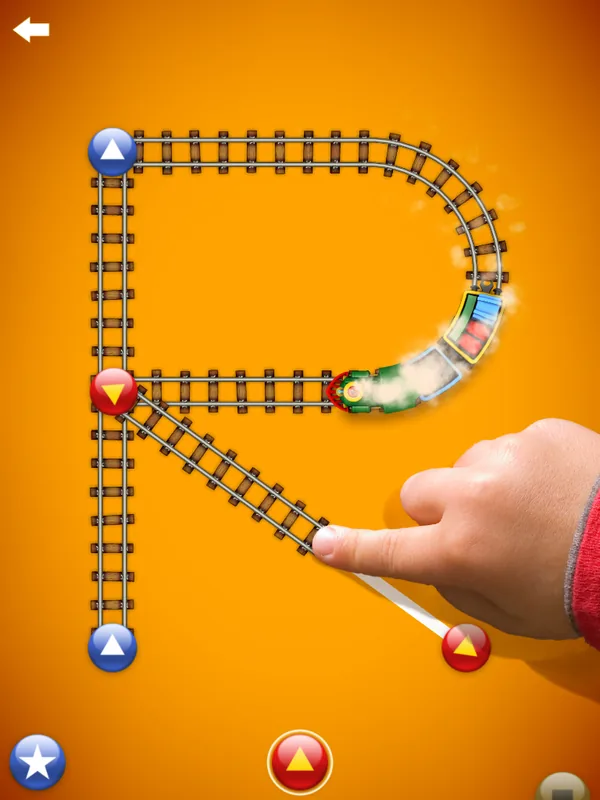
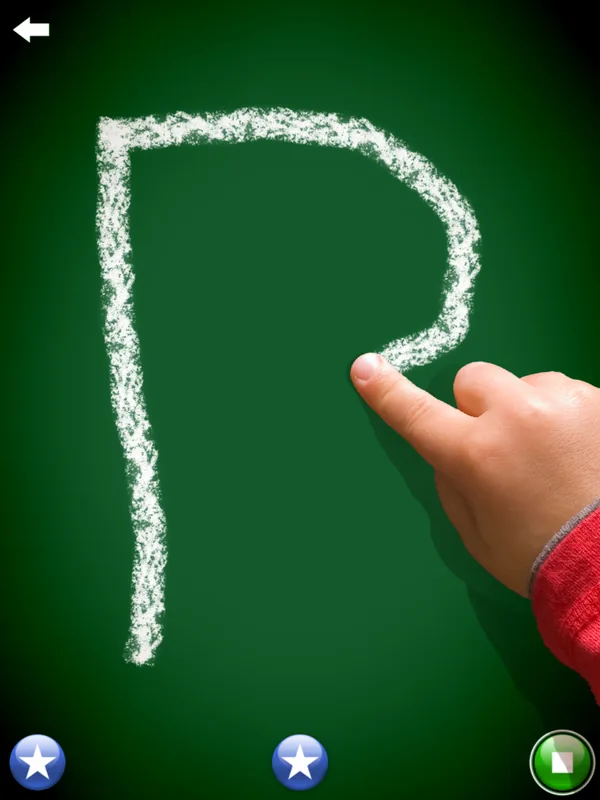
The LetterSchool app
Between worksheets: practise in the app
The same letter shapes as this sheet, with instant feedback on every line, animations and stars. Children play, and learn the right formation.