

Reading was for saw (and on for no)
Your child reads “saw” when the word is “was”, or “no” for “on”. These words have the same letters in a different order. Reading every letter from left to right solves it over time.
For: Parents, teachers and therapists of children aged 4 to 8
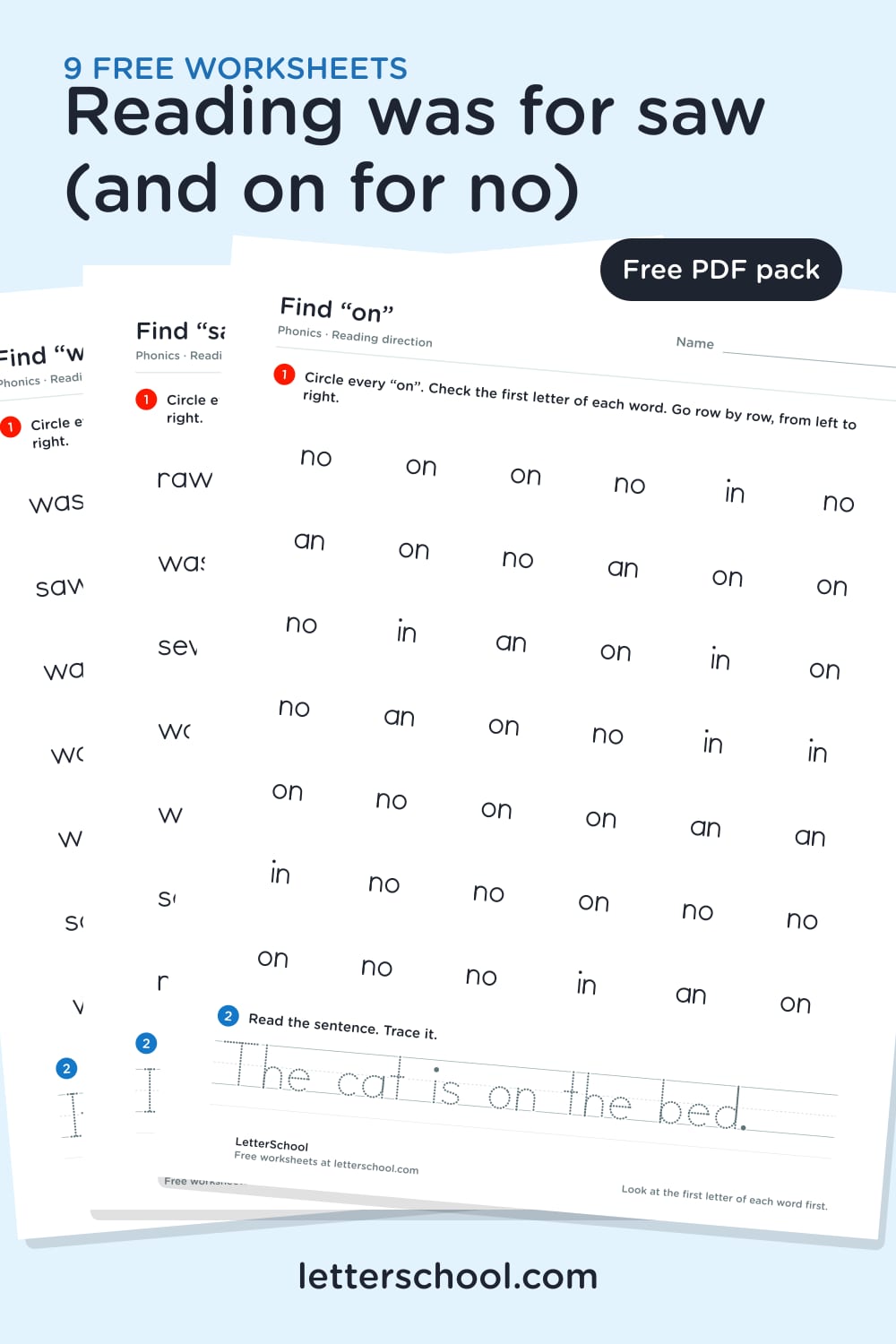
A cover page with the plan, then 9 worksheets in order (10 pages). Free, no sign-up.
Free, no sign-up. US Letter size. Download A4 instead · Open to print
 Save to Pinterest
Why it happens
- Short words with the same letters are easy to mix up when children look at the whole shape.
- Some children do not yet always start at the left.
- It is common in early readers and not on its own a sign of dyslexia.
What helps
- Point under the first letter and say its sound.
- Hunt for the two words separately.
- Read sentences where only one makes sense.
- Practise left-to-right tracking.
The planstep by step.
1Word hunts
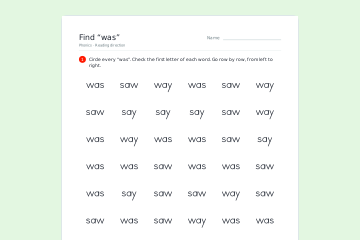
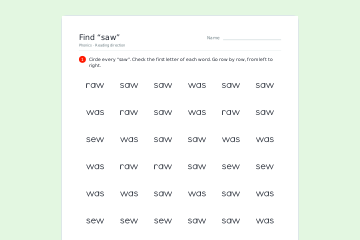
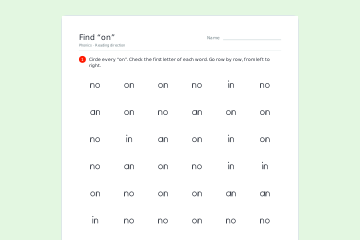
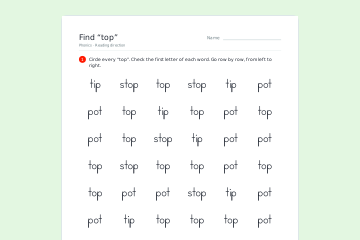
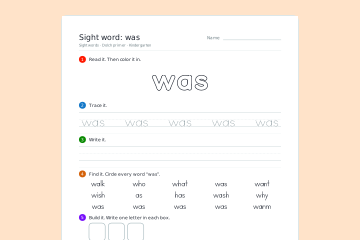
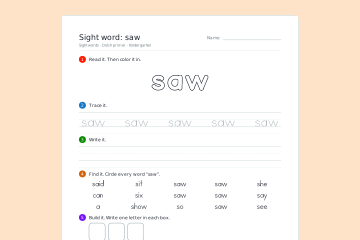
Find was and saw, on and no, top and pot.
2Left to right
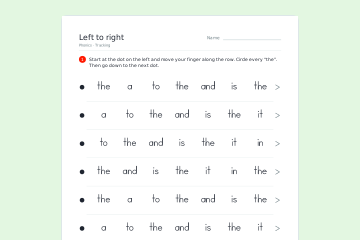
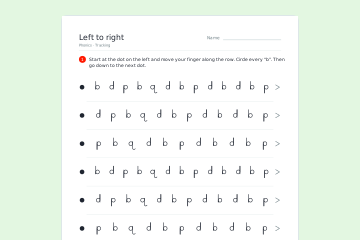
Tracking from the left.
3Heart words
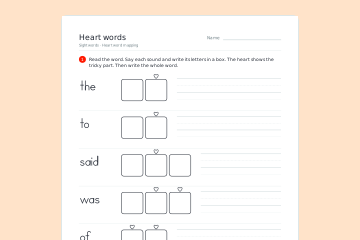
Map was sound by sound.
When to ask for help
Ask the teacher if word reversals are frequent beyond 2nd grade and reading is much harder than for classmates.
These worksheets are practice materials, not a diagnosis or a treatment. Every child develops at their own pace. If you are worried, talk to your child’s teacher, doctor or a specialist.
Is reading was as saw a sign of dyslexia?
Related packs
Sources
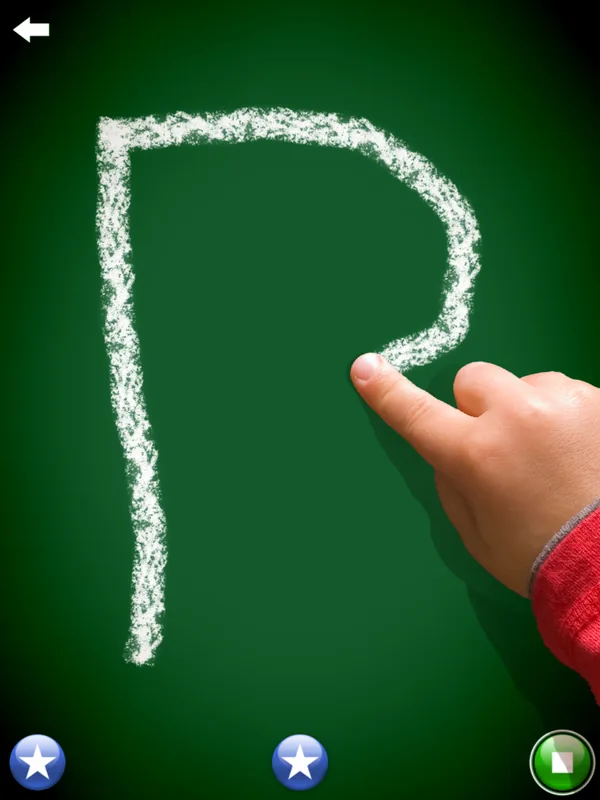
The LetterSchool app
Between worksheets: practise in the app
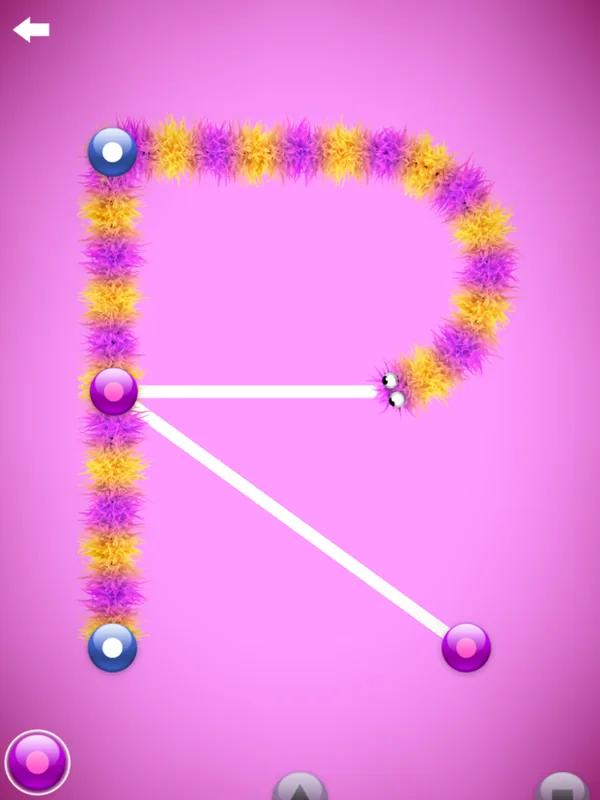
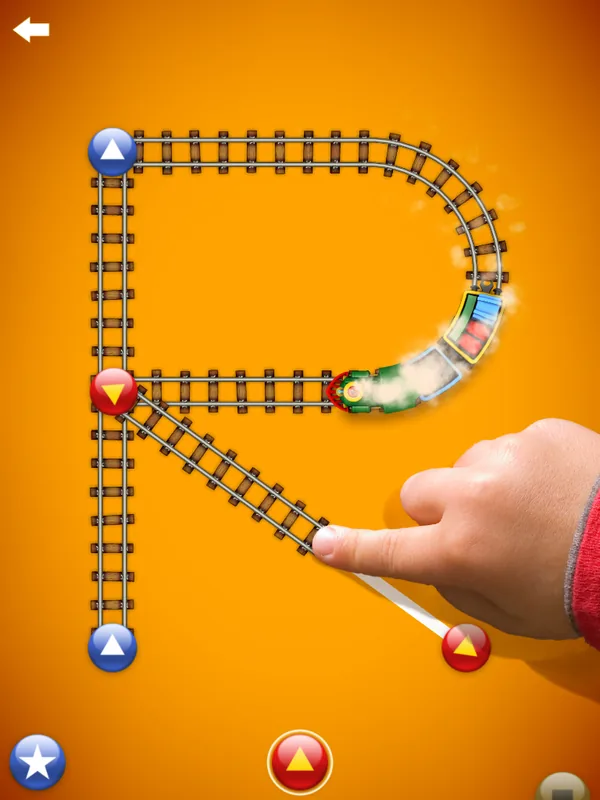
The same letter shapes as this sheet, with instant feedback on every line, animations and stars. Children play, and learn the right formation.