

Reading and writing with children with Down syndrome
Many children with Down syndrome become readers, and reading can help their speech and language too. Visual learning is often a strength, so starting with words and pictures, then adding phonics, works well for many.
For: Parents, teachers and therapists of children with Down syndrome, aged 4 and up
A cover page with the plan, then 10 worksheets in order (11 pages). Free, no sign-up.
Free, no sign-up. US Letter size. Download A4 instead · Open to print
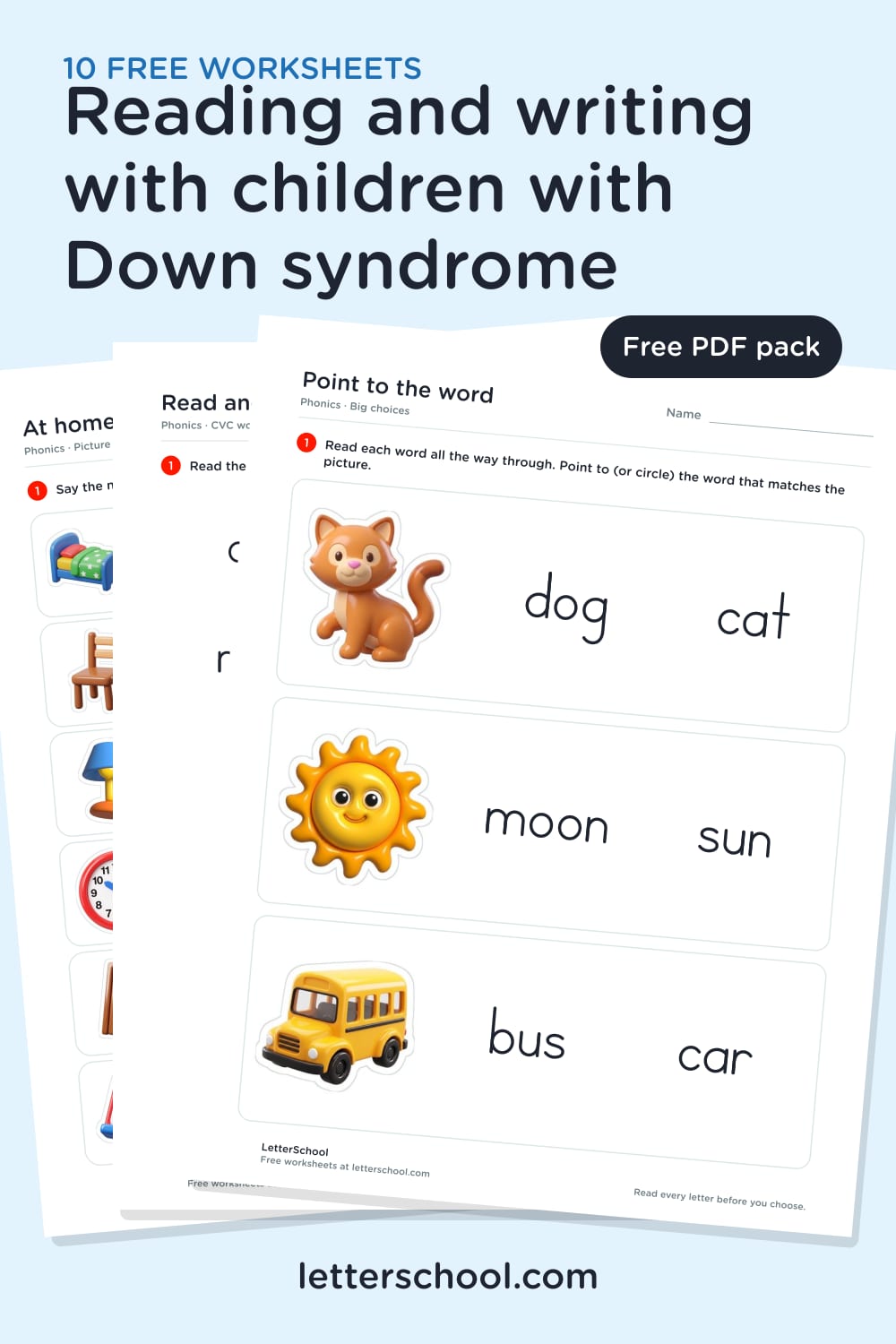 Save to Pinterest
Why it happens
- Visual memory is often stronger than auditory memory.
- Reading words can support talking and grammar.
- Fine motor skills and low muscle tone can make handwriting slower.
What helps
- Start with meaningful words: names, family, favourite things.
- Match words to pictures, then select, then name.
- Add letter sounds and phonics alongside.
- Short, frequent sessions with lots of success.
- Make simple personal books.
The planstep by step.
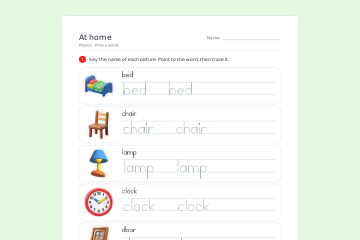
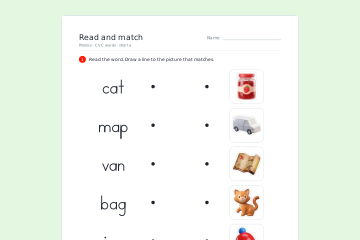
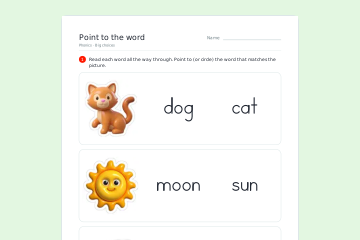
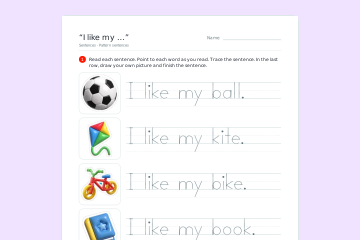
1Match words and pictures
Picture words and read and match.
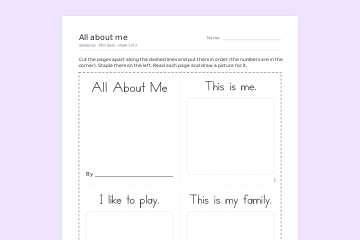
2My book
A personal mini book.
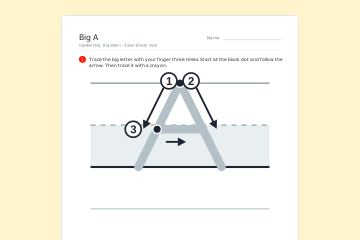
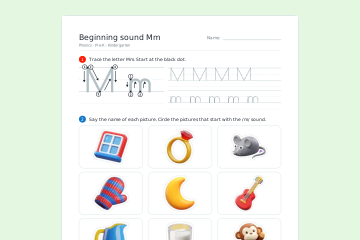
3Letters and sounds
Big letters and letter sounds.
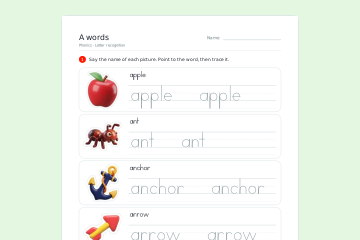
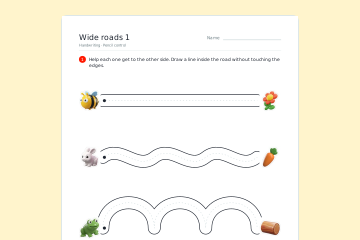
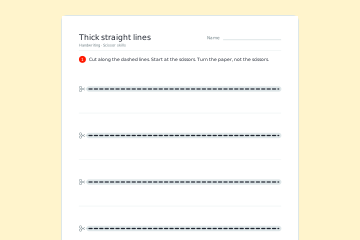
4Hands
Pencil control and scissors.
When to ask for help
Work with your child’s team: a speech and language therapist (speech-language pathologist), an occupational therapist (OT) and the school can tailor reading and writing goals.
These worksheets are practice materials, not a diagnosis or a treatment. Every child develops at their own pace. If you are worried, talk to your child’s teacher, doctor or a specialist.
At what age can children with Down syndrome start reading?
Related packs
Sources
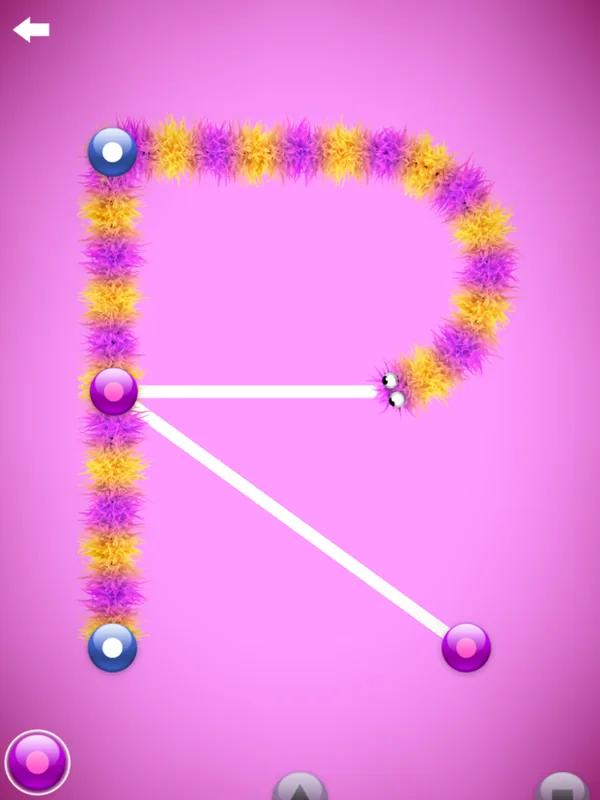
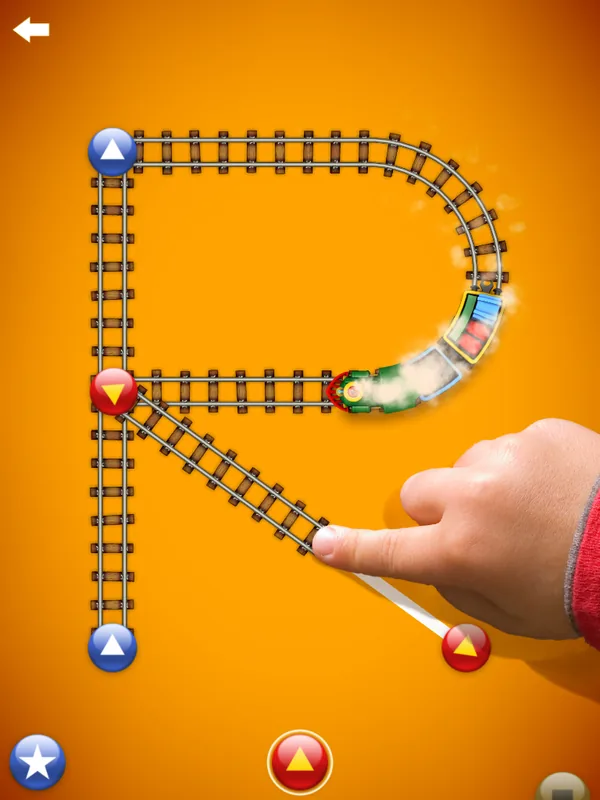
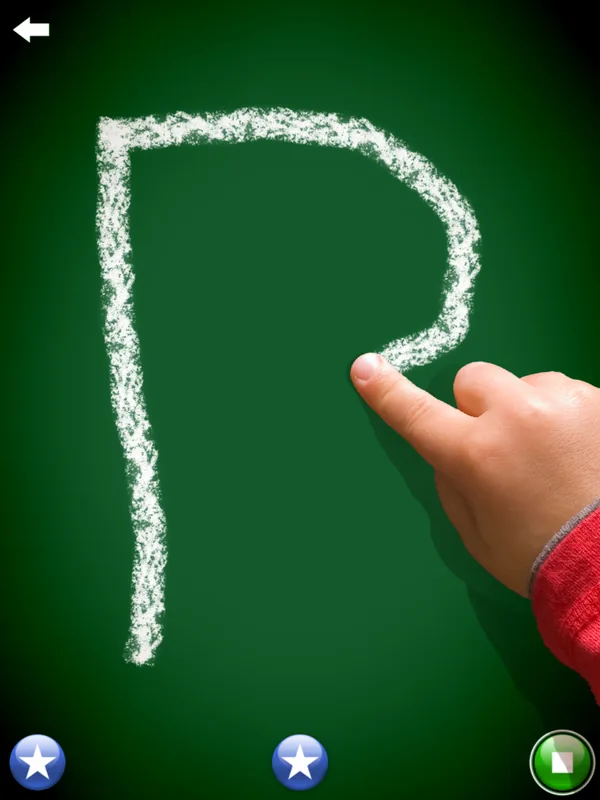
The LetterSchool app
Between worksheets: practise in the app
The same letter shapes as this sheet, with instant feedback on every line, animations and stars. Children play, and learn the right formation.