

When your child does not want to write
Your child says “I don’t know what to write”, or writes one sentence and stops. Writing is hard work for young children: ideas, spelling and handwriting all at once. Making it smaller and more meaningful helps.
For: Parents, teachers and therapists of children aged 4 to 8
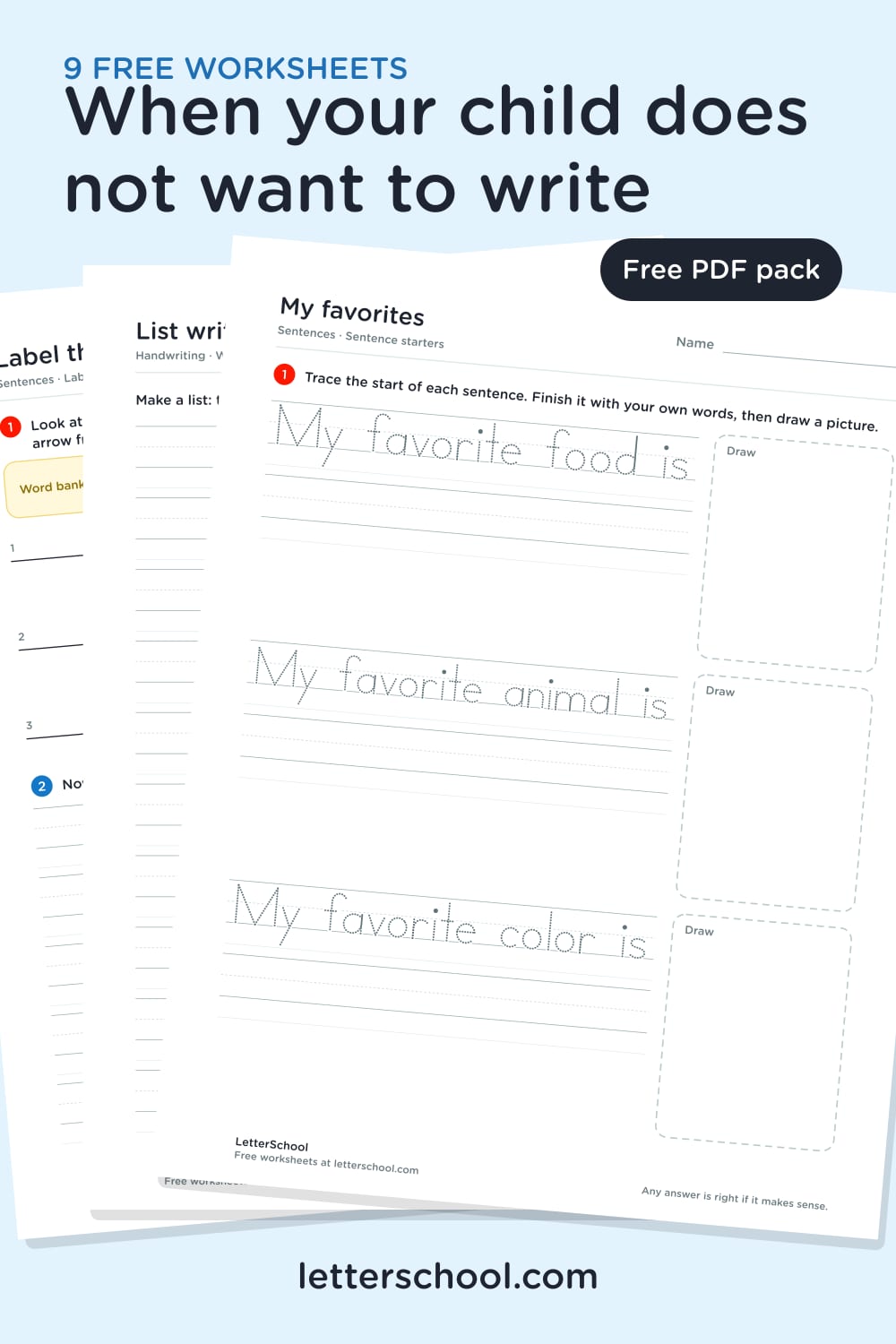
A cover page with the plan, then 9 worksheets in order (10 pages). Free, no sign-up.
Free, no sign-up. US Letter size. Download A4 instead · Open to print
 Save to Pinterest
Why it happens
- Handwriting and spelling that are not yet automatic make writing tiring.
- A blank page with no idea is daunting.
- Some children fear making mistakes.
What helps
- Draw first, then write about the drawing.
- Talk it through before writing; you can write their first sentence down as they say it.
- Start small: a label, a list, a caption.
- Let them write about what they love.
- Praise ideas, not just neatness.
The planstep by step.
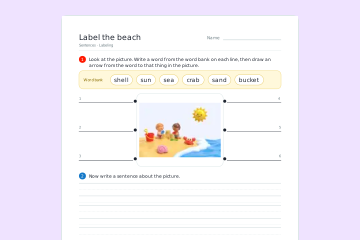
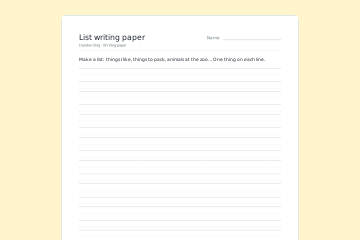
1Small writing
Labels and lists count as writing.
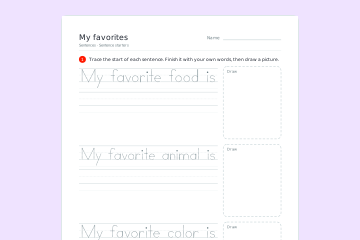
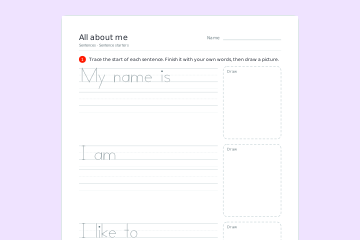
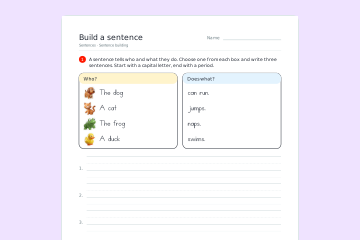
2Starters
Sentence starters and frames.
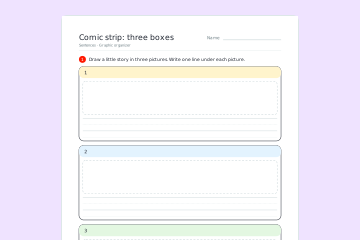
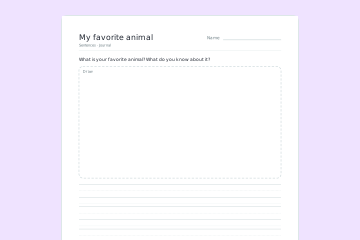
3Draw and write
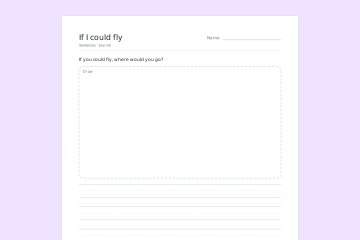
Comic strips and journal pages.
4Brave writing
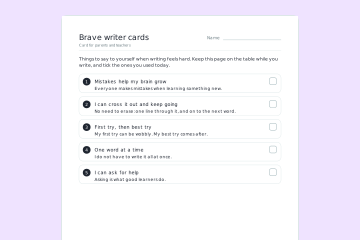
A card for when it feels hard.
When to ask for help
Ask the teacher or an occupational therapist if avoiding writing comes with very slow or painful handwriting, or with strong distress about writing tasks.
These worksheets are practice materials, not a diagnosis or a treatment. Every child develops at their own pace. If you are worried, talk to your child’s teacher, doctor or a specialist.
Questions
Questions about reluctant writers
Still have questions? Visit our Help Center or get in touch.
How much should a 6 year old write?
Related packs
Sources
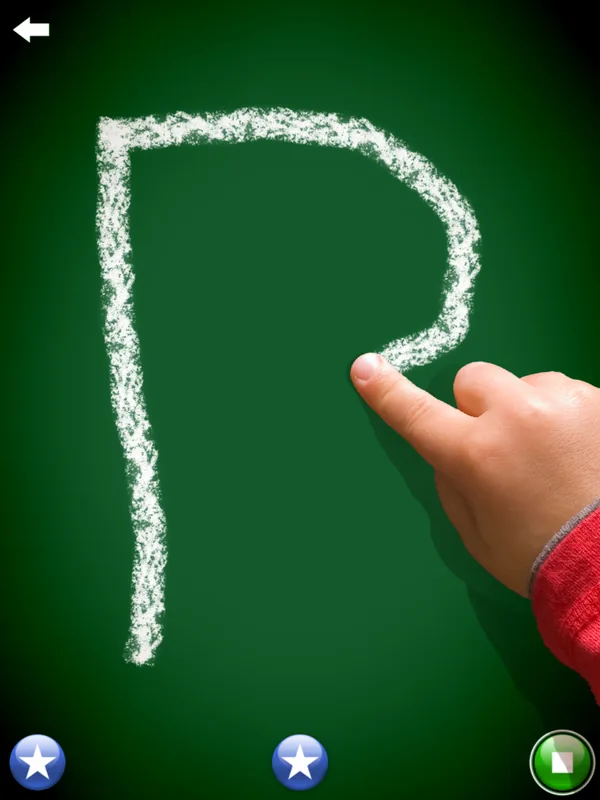
The LetterSchool app
Between worksheets: practise in the app
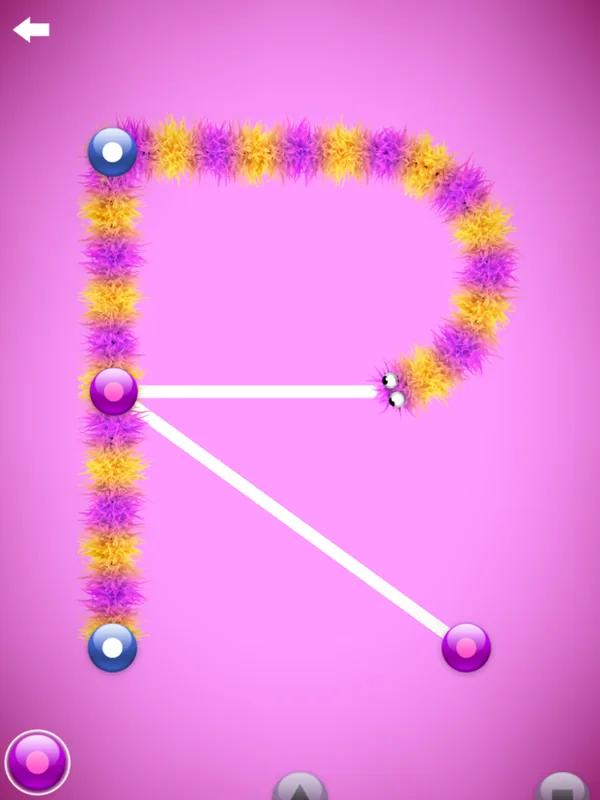
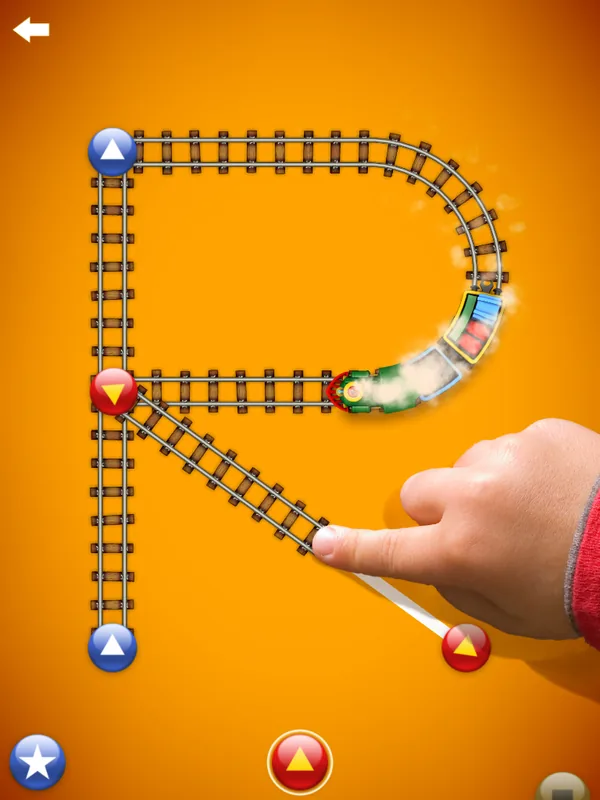
The same letter shapes as this sheet, with instant feedback on every line, animations and stars. Children play, and learn the right formation.